Madison Square Garden, the New York Knicks, and jaw-dropping ticket prices are the story here: fans in New York are seeing upper-deck seats listed for hundreds, nosebleed rows for thousands, and courtside spots priced in the tens of thousands, with reported sales pushing six figures, all while the secondary market hums behind the scenes.
A slice of pizza from Joe’s, a bagel from Zabar’s, a dirty water dog — only in New York. That neighborhood bravado sits beside a less charming spectacle: Knicks playoff tickets blasting into price territory that feels absurd even for this city. Routine postseason demand has turned into a feeding frenzy when the franchise edges toward its first NBA Finals appearance since 1999.
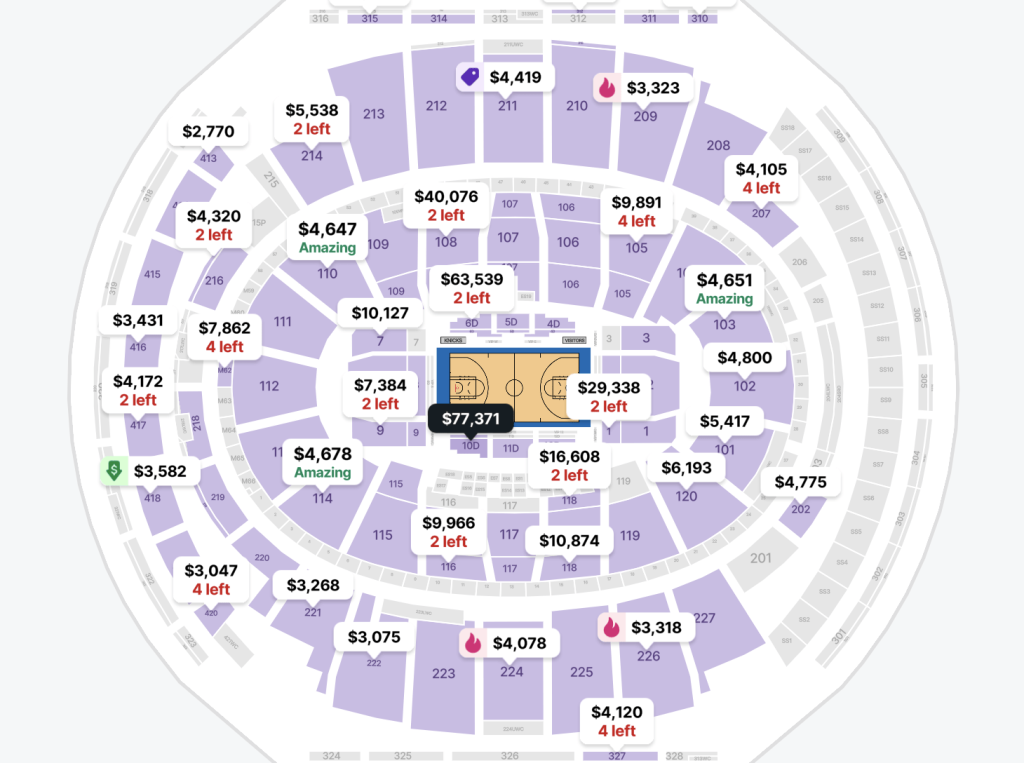
Numbers tell the blunt version of the story. For the Eastern Conference Finals, upper-deck spots have been changing hands for roughly $500, while some of the worst seats in the building are listed for more than $4,000. Then there are the headlines: a courtside-adjacent seat carrying a price tag of $77,371, and reports of another right-side courtside ticket selling for over $102,000 during the weekend.
Those figures aren’t fantasy. They’re the product of a secondary market that has evolved from a convenience for fans into an industrial-scale operation. Automated buying, bulk purchase strategies, and coordinated resellers mean inventory evaporates in seconds once primary sales open, and what’s left is sold to the highest bidder.
That process rewrites the economics of a single seat. A courtside ticket that might have been listed initially around $7,000 can become the seed of a million-dollar weekend for a reseller if a buyer with deep pockets shows up. When multiple actors are running scripts to grab every available item, the market doesn’t behave like a neighborhood swap meet; it looks like a crowded trading floor where scarcity and FOMO set the rules.
The result is a distorted experience for ordinary fans. Families and long-time supporters who budget for a rare playoff trip find themselves priced out or pushed into buying via less reputable channels. Meanwhile, there’s a small but visible class of buyers who can drop stacks on a single game and treat it like a status purchase instead of a shared cultural moment.
Part of the shock is the contrast. In a city where inflation, housing costs, and everyday expenses bite into budgets, the headline-grabbing ticket sales feel especially striking. That dissonance fuels a conversation about whether sports are becoming more spectacle than community and whether the systems that handle ticket distribution are set up to protect fair access or simply to monetize urgency.
From a market standpoint, the ingredients are simple: limited supply, surging demand, and intermediaries optimized for maximizing returns. Ticketing platforms and resale sites have shifted from occasional resale hubs to central marketplaces, and that shift has reshaped expectations about what a ticket is worth. Teams, leagues, and platforms have tools they can use to influence outcomes, but the basic tug of supply versus demand is hard to beat when millions want a tiny number of seats.
Fans still show up, though, which is the engine behind all this. The willingness of individuals to pay extreme prices, whether motivated by loyalty, status, or fear of missing out, keeps the cycle turning. Until something changes in how tickets are allocated or how resellers operate at scale, high-stakes sales at Madison Square Garden will remain part of the playoff narrative for New Yorkers and out-of-towners alike.