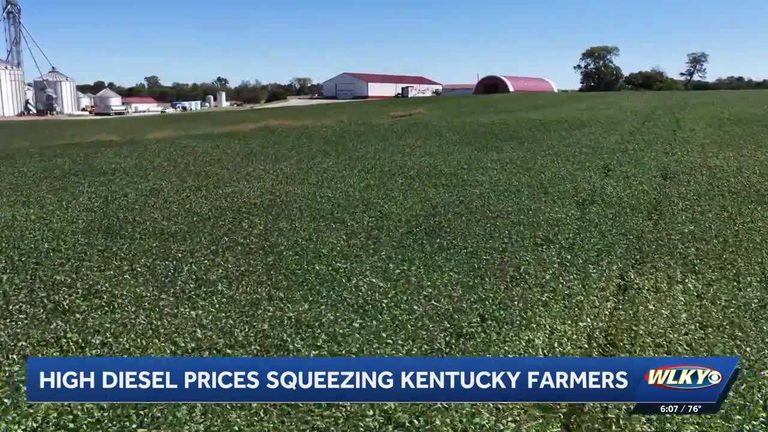
When the corn, soybeans and wheat are ready to be pulled from the fields of Shelby County, Kentucky, farmer James Tucker is racing against a new obstacle: record‑high diesel costs. The national average for a gallon of diesel has risen to $6.50, nearly $3 more than a year ago, and Tucker’s combine and trucks are feeling the pinch.
Fuel costs eat into harvest margins
“We’re going ahead with harvest and trying to get it picked as quick as we can,” Tucker said, describing the urgency of the season. He estimates he will use about 10,000 gallons of diesel during the harvest. “It’s definitely hurting our pocketbook and our budget,” he added, noting that the price he paid at the start of the month was more than double what he paid last year.
“If we make any money, it won’t be much,” Tucker warned, underscoring how the fuel surge threatens the profitability of his operation.
Experts link price spike to overseas conflict
Jose Fernandez, chair of the Economics Department at the University of Louisville, explained that the surge stems from geopolitical tensions. He cited the United States’ conflict with Iran and the ongoing war between Russia and Ukraine as primary drivers of the higher diesel price.
“Farmers can’t continue to just foot the bill themselves. They’re going to have to pass it on to the consumer,” Fernandez said. “Everything that you have has probably been touched by diesel in some way.”
Good crops provide a partial cushion
Despite the fuel challenge, Tucker remains grateful for a strong harvest. “We’ve been blessed with a good crop this year. It’s been a good yield. So that’ll help offset some of the fuel prices for us,” he said.
The situation highlights a broader issue for Kentucky’s agricultural community, where diesel powers everything from tractors to the semi‑trucks that transport crops to market. As fuel prices remain elevated, many farmers fear that the added expense will ultimately be reflected in higher food prices for consumers.
What’s next for Kentucky farmers?
Local agricultural groups are monitoring the situation closely and urging state officials to explore relief measures, such as tax incentives or temporary fuel subsidies, to help mitigate the impact on family farms. In the meantime, farmers like Tucker are adjusting planting schedules, seeking more efficient equipment, and looking for ways to conserve fuel wherever possible.
For Kentucky’s rural families, the harvest remains a critical time of year, and the hope is that a bountiful crop will soften the blow of today’s diesel surge.
Original reporting: WLKY Louisville — read the source article.