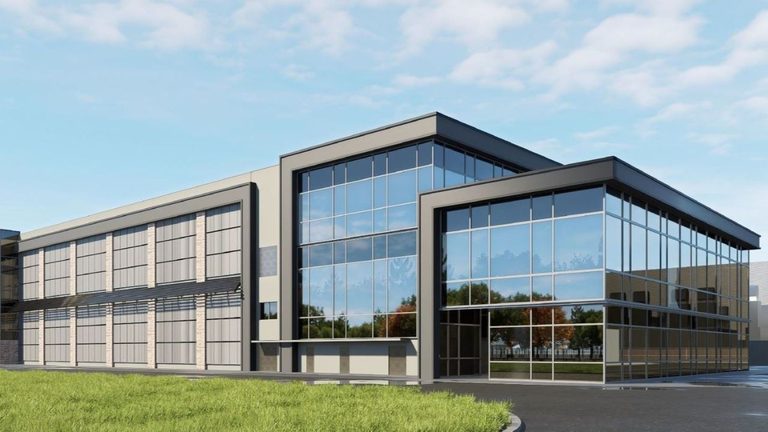
Keller City Council unanimously gave City Manager Aaron Rector authority to finalize a $1.876 million settlement with developer Circle T Owner LP on November 5. The agreement secures a $1.5 million Noise Mitigation Fund and a $300,000 Fire Protection Fund, plus $76,000 for the city’s attorney and expert costs.
Key protections for residents
The Noise Mitigation Fund may be used for acoustic studies, continuous monitoring, and any mitigation measures the city deems necessary to protect nearby homes. Quarterly independent monitoring will run for the first three years, with a baseline study of at least 72 hours. Noise limits are set at 49 decibels at residential property lines from 7 p.m. to 7 a.m., and 56 decibels during daytime hours, with specific octave‑band restrictions.
The Fire Protection Fund covers specialized training, equipment, replacement, and decontamination costs related to emergency response at the facility. The developer will also install backup generators that meet EPA Tier 4 emissions standards, with testing limited to 10 a.m. – 4 p.m.
Limits on city opposition
Section 4.3 of the settlement bars Keller officials from opposing or delaying a compliant project, including by assisting third‑party challenges. If Circle T notifies the city of an alleged violation, Keller has seven days to cure the issue to the developer’s satisfaction. The city may still discuss broader data‑center policy with state lawmakers.
Section 2.3(e) makes the $1.5 million contribution the city’s exclusive monetary remedy for any breach of the noise provisions. After that payment, Keller cannot seek additional monetary damages or penalties, though non‑monetary obligations remain in force.
Project details
The Westlake campus will span roughly 1.1 million square feet across four buildings, with a planned power capacity of 300 megawatts. The developer will finance an on‑site switch station and substation, and has pledged to supply the project’s water needs.
Projected water use is 54 million gallons annually, with a maximum daily demand of 1.5 million gallons and 5.5 million gallons of on‑site storage. The cooling system is expected to operate without water about 85 percent of the year. These figures are developer estimates and have not yet been measured in operation.
Community concerns and legal background
Nearby residents have raised concerns about noise, property values, water consumption, and the approval process. In August, Dallas attorney Ashley Cook sent a letter questioning the adequacy of the landscaped buffer, floodplain changes, and drainage analysis. Cook clarified she represented no party in the dispute.
Earlier, a Tarrant County judge issued a temporary restraining order on August 17 that halted a broader set of permit restrictions, though the order was dissolved in September without deciding the merits of homeowners’ allegations.
Economic impact
Westlake projects the campus will generate $5 million in annual town revenue during its first decade, rising to $7 million thereafter, bolstering the local commercial tax base. While Keller does not collect the property taxes directly, the revenue is expected to benefit the broader region.
The settlement also requires a 10‑foot landscaped berm, irrigation, replacement of damaged screening trees, restrictions on exterior lighting and surveillance cameras, and specific grading and drainage plans. These conditions aim to address visual and environmental concerns raised by the community.
Next steps
The agreement’s effectiveness will depend on the forthcoming construction plans, compliance monitoring, and the city’s ability to enforce the noise and fire provisions. Keller officials and residents will watch closely as the project moves toward operation.
Original reporting: The Dallas Express — read the source article.