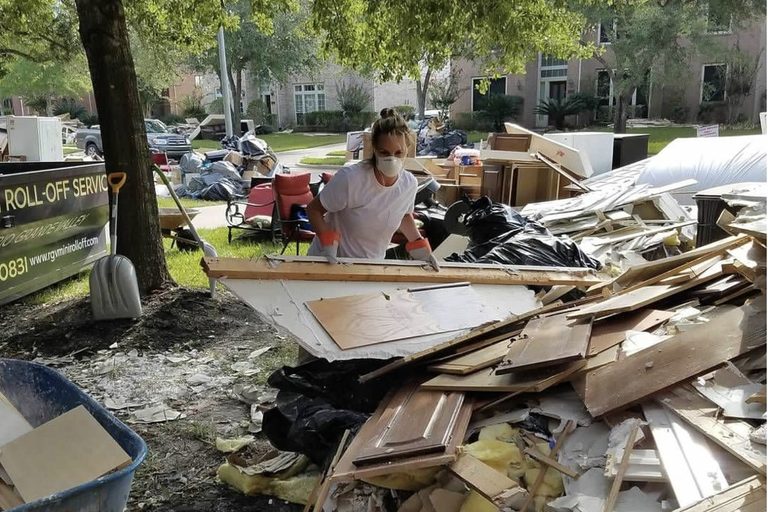
Nearly a decade after Hurricane Harvey devastated the Greater Houston area, local officials in Katy, Fulshear and Harris County are moving forward with a series of flood mitigation projects designed to keep rising waters at bay. Residents like Janet and Samuel Gardner, who lost cherished belongings when their home was submerged during Harvey, now see tangible progress in the form of new drainage improvements and detention ponds.
Recent and Ongoing Drainage Projects
The city of Katy recently finished the $4 million Patna drainage improvements and, in 2025, completed a $5 million project serving the Heights, Airline and Drexel Streets corridor, according to City Engineer David Kasper. Two larger initiatives are under way: a $9.9 million drainage effort along Katy Hockley Road and a $4.2 million West Katy project slated for completion early in 2027.
In neighboring Fulshear, officials have raised the bar for post‑Harvey development by imposing stricter detention and flood mitigation standards. The town has already funded a $2.33 million downtown east‑side drainage project and is reconstructing Fourth Street. Three additional drainage capital‑improvement projects have been approved for fiscal year 2026‑27, said Assistant Director of Public Works David Licon.
County‑Level Initiatives
Harris County Precinct 4 is also contributing to regional resilience. Ongoing work includes rehabilitation of the Addicks/Barker Reservoir channel, upgrades to an east‑side detention basin, and a comprehensive Buffalo Bayou and tributaries resiliency study.
Professor Shuhab D. Khan of the University of Houston explained that the Greater Houston region faces increasing flood risk due to extreme weather events and the phenomenon of land subsidence caused by groundwater over‑pumping and rapid urbanization. “Katy is one of the fastest‑subsidizing areas in the region,” he noted.
Expert Perspectives on Flood Management
Fulshear Public Works Director Cliff Brouhard emphasized the importance of detention: “You have to build ponds that capture increased flow and then slowly release it into the system to avoid overwhelming downstream ditches.” Similarly, Russ Poppe, first assistant engineer of the Fort Bend County Drainage District, advocated for a regional approach, stating that a single large pond can serve multiple neighborhoods more efficiently than many smaller ones.
One of Fort Bend County’s flagship efforts is the $85.2 million “Brazos Project,” a six‑part initiative aimed at reducing erosion and flood risk along the Brazos River and Mustang Bayou.
Collaboration and Future Planning
Representatives from Harris County, Waller County and the Brookshire‑Katy Drainage District signed a memorandum of understanding in August to form a Regional Flood Resiliency Coalition, underscoring the need for coordinated action across jurisdictional lines.
The city of Katy is also exploring participation in the National Flood Insurance Program’s Community Rating System, a move that could lower flood insurance premiums for homeowners.
Looking ahead, the Brookshire‑Katy Drainage District is proposing a $140 million bond election for May 2027 to fund five regional storm‑water detention basins and five channel‑improvement projects.
Leadership Statements
Katy Mayor Dusty Thiele highlighted the long‑term mindset guiding the city’s efforts: “We don’t plan a year in advance; we’re planning out years and years in advance on what’s coming in and what we can do to help our citizens here in the city.” Harris County Precinct 4 Commissioner Lesley Briones added, “We’re both improving maintenance and delivering billions of dollars of capital projects, while also working on a resilience plan that will guide our work for years to come.”
These combined initiatives reflect a proactive, faith‑guided commitment to safeguarding families, preserving property, and upholding the constitutional right of residents to live in safe, resilient communities.
Original reporting: Community Impact — Houston — read the source article.