Italian emergency crews confirmed that a 29‑year‑old American from Kansas was killed by a lightning strike while hiking the Rocca Capra area of Mount Etna, Europe’s largest active volcano. The incident occurred Sunday evening at approximately 1,400 meters elevation, an exposed and barren section of the volcano’s slope.
Rescue teams deployed a helicopter to retrieve the hiker after the strike. Medical personnel who examined him on site declared him dead. The victim’s name has not been released pending notification of family members.
Volcanic activity and safety measures
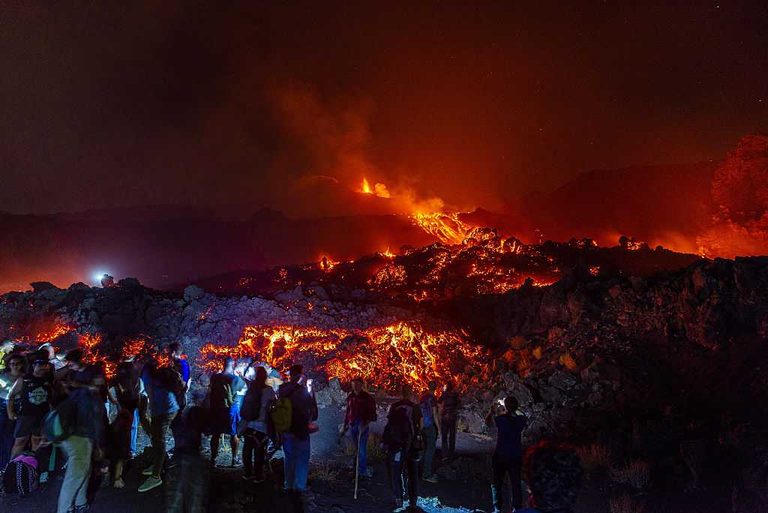
Mount Etna has been experiencing a period of heightened activity in recent weeks, prompting Italian authorities to restrict access to several sections of the mountain. The closures were intended to protect hikers from both volcanic hazards and related disruptions, such as the temporary shutdown of Catania International Airport earlier in the week.
Officials noted that while the volcano’s eruptions have drawn significant attention, lightning strikes have historically posed a greater risk to visitors. Over the past several decades, more fatalities on Etna have resulted from lightning than from volcanic eruptions. The last death directly linked to an eruption occurred in 1987.
Travel advisories
Italian fire and rescue services advise all hikers to monitor weather forecasts closely, avoid exposed ridgelines during thunderstorms, and heed posted trail closures. The agency also recommends traveling in groups, carrying appropriate safety equipment, and staying informed about real‑time volcanic alerts issued by the National Institute of Geophysics and Volcanology (INGV).
Tourists planning to visit Sicily’s volcanic regions are encouraged to register their itineraries with local authorities and to keep emergency contact information readily available. The combination of volcanic activity and unpredictable weather underscores the importance of preparedness when exploring high‑altitude environments.
Impact on the community
The tragedy has resonated with both the Kansas community and the broader travel community in the United States. Local officials in Kansas have expressed condolences to the family and reminded residents of the inherent risks associated with adventure travel abroad.
While the incident does not appear to be linked to any policy dispute, it highlights the ongoing need for clear communication between foreign safety agencies and American travelers. The U.S. Department of State continues to issue travel advisories for regions with active geological hazards, urging citizens to stay informed and to follow local guidance.
Original reporting: Oklahoma City News Feed (HLL/CB) — read the source article.