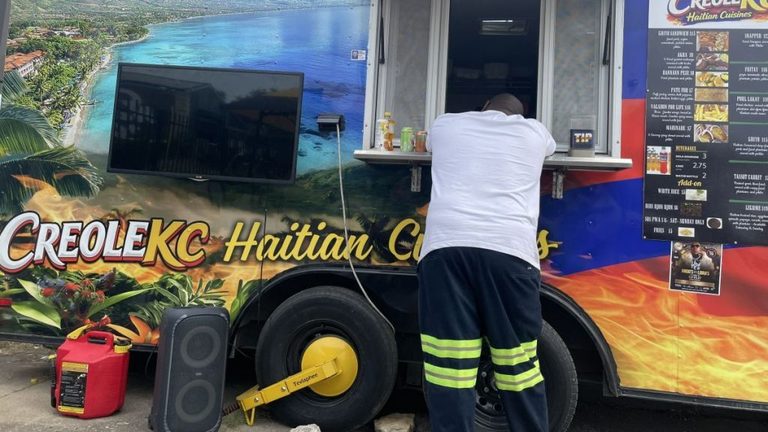
When the Trump administration announced the termination of temporary protected status (TPS) for Haitians on July 27, the impact was felt immediately on the streets of Kansas City. At the CreoleKC food truck near 33rd and Main, brothers Cherven and Jims Desauguste watched customers line up for familiar dishes from Port‑au‑Prince while the community grappled with the news that roughly 330,000 Haitians in the United States were now deportable.
Local families and faith institutions feel the strain
Many Haitian families in the metro area have lived here for decades, contributing as nurses, therapists, certified nursing assistants, and manufacturing workers. They are also an active part of the city’s Christian fabric, with at least four Haitian churches serving the faithful. “All they want to do is work, to finish their shifts each day,” said Cherven Desauguste, who runs the food truck and the Black Garlic restaurant.
Since the TPS revocation, Haitian residents report heightened fear of immigration enforcement. “Since the new administration came into power, they have been living in fear,” said nurse and U.S. citizen Nickita Desert. She noted that community members now avoid shopping centers and even local grocery stores out of concern for being stopped by agents.
Deportations begin despite violence in Haiti
The first deportation flight, chartered by the Department of Homeland Security, left on Aug. 20 with about 160 passengers. The plane landed in a northern Haitian city because Port‑au‑Prince remains too dangerous due to armed gang activity. Within days, gangs murdered 47 people and kidnapped nearly as many in the same region.
United Nations reports indicate more than 3,100 killings and 1,200 injuries in Haiti during the first half of the year, underscoring the peril that deportees would face upon return.
Community response and legal assistance
The Haitian Community Center of the Mid‑West (HACMI) has organized legal workshops to inform residents—both citizens and lawful permanent residents—of their rights if approached by immigration officials. These sessions aim to empower a community that already feels targeted.
Local events that once celebrated Haitian culture have been muted. The annual Ethnic Enrichment Festival in Swope Park featured no Haitian booth this year, and attendance at Haitian churches has dropped, with some services seeing only half their usual congregation.
Looking ahead
Despite the challenges, the community remains resilient. The 14th Annual KC Haitian Symposium is scheduled for Sept. 12 at Village Presbyterian Church, featuring journalist Jacqueline Charles, who will discuss the ongoing crisis. Meanwhile, the annual Labor Day Haitian picnic in Loose Park will go on, though organizers acknowledge some families may stay home out of fear.
As Kansas City’s Haitian residents navigate the fallout of federal policy, their story highlights the intersection of immigration law, faith, and the pursuit of the American dream.
Original reporting: The Beacon (Kansas City) — read the source article.