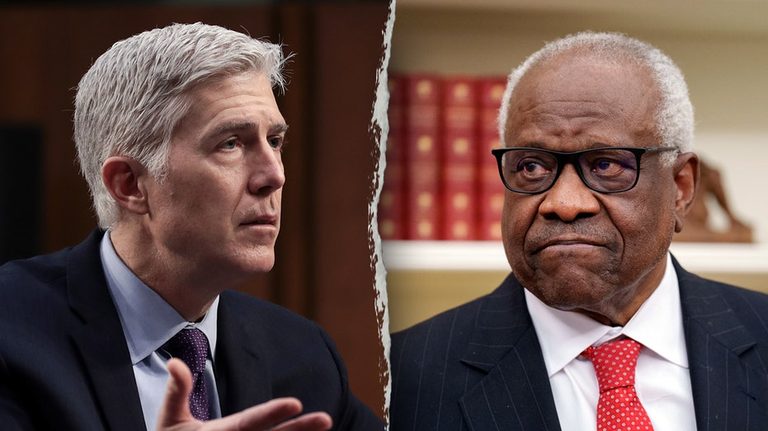
Two of the Supreme Court’s conservative justices, Clarence Thomas and Neil Gorsuch, criticized the majority’s decision not to take up attorney Alan Dershowitz’s defamation case against CNN, saying the high court missed an opportunity to revisit a controversial 1960s defamation precedent.
Background of the Case
Dershowitz, who has represented famous figures like President Donald Trump, O.J. Simpson, and Leona Helmsley, claimed CNN deceptively edited a snippet of his defense during Trump’s first impeachment trial to make it sound like he said the opposite of his fuller statements and used that clip to damage his reputation.
Justices Thomas and Gorsuch argued that the ‘actual malice’ standard in evaluating whether CNN defamed Dershowitz is not rooted in the Constitution and was created in the Supreme Court’s landmark 1964 decision in New York Times Co. v. Sullivan.
Historical Context
The Sullivan case arose after a Montgomery, Alabama, commissioner sued the Times for libel over a full-page advertisement criticizing how the city treated civil rights protesters. An Alabama jury awarded damages to L.B. Sullivan even though he was not mentioned by name in the ad.
The Supreme Court later reversed the ruling, holding that a public official cannot prevail in a defamation case unless he proves the statement was made with ‘actual malice’ — knowing it was false or acting with reckless disregard for the truth.
Thomas and Gorsuch pointed to the Sedition Act of 1798 as a historical example, which imposed a far lower threshold for defamatory statements about public officials.
President Trump has called for loosening U.S. libel laws, echoing concerns similar to those expressed by Thomas and Gorsuch about the court’s defamation jurisprudence.
Original reporting: Fox News (HLL/CB) — read the source article.