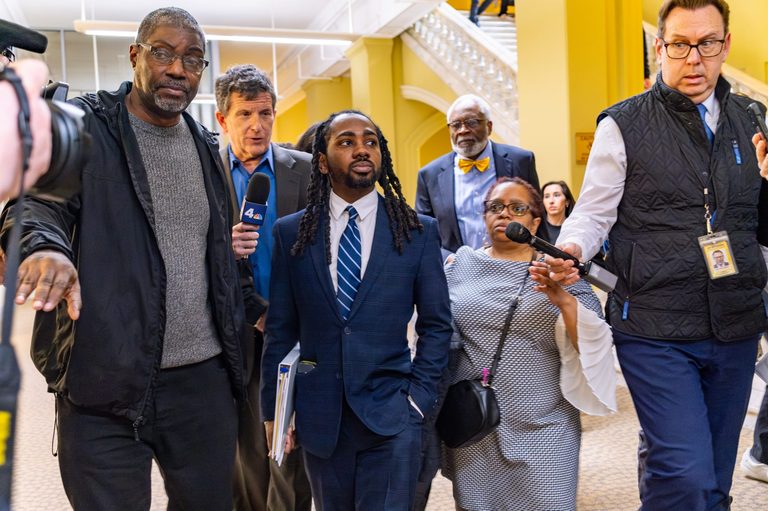
Washington, D.C. – The federal trial of Ward 8 Councilmember Trayon White, Sr. entered its most visible phase this week as jurors were screened and opening statements were delivered. The process underscored community concerns about fairness and the seriousness of the bribery allegations facing the councilmember.
Juror concerns and court rulings
One prospective juror, identified only as Juror 1579, expressed unease about the ability to set aside personal research on police misconduct. Speaking to U.S. District Court Judge Rudolph Contreras, the juror said, “There are many flaws in the system. It’s hard to fix… I did research on police misconduct where people are found guilty but did not commit the crime.” Despite the juror’s reservations, Judge Contreras allowed the selection to proceed, ultimately using peremptory challenges to reduce the pool from 32 to 14.
Composition of the final jury
The 14‑person jury reflects a diverse cross‑section of the District: one Latina, three Black women, two Black men, five white women and five white men. Both the prosecution and defense were allotted six peremptory challenges each, a tool permitted under the Batson Rule for non‑discriminatory removal of jurors.
Prosecution’s case: alleged contract kickbacks
Prosecutor John Crabb opened with a video of White speaking to Allieu Kamara, a local business owner who the defense later identified as White’s brother‑in‑law. Crabb argued that White used his council position to pressure employees of the Office of Neighborhood Safety and Engagement (ONSE) and the Department of Youth and Rehabilitative Services (DYRS) to award $5.2 million in contracts to Kamara’s companies.
Evidence presented included video footage from June 26 to July 18, 2024 showing White entering Kamara’s car and discussing contract renewals. FBI Special Agent Matthew Gano testified that Kamara handed White $35,000 in cash over five meetings, most of which occurred in Kamara’s car parked near White’s Navy Yard condo.
Defense’s response
Defense attorney Warren G. Kohlman countered that White was merely performing his duties as a councilmember, helping constituents navigate government services. Kohlman described Kamara as a “snitch” who turned on White after being investigated for Paycheck Protection Program fraud.
Political fallout
Following White’s arrest, the council stripped him of his chairmanship of the Committee on Recreation, Libraries, and Youth Affairs, and later expelled him from the council. He subsequently won a special election to regain his seat, though he no longer holds any committee leadership positions.
Community reaction
Edward James Ford III, a Ward 1 resident and longtime supporter of White, told The Informer that the trial is part of a broader effort to undermine authentic Black male political leadership in the District. “If Trayon White has more of an activist spirit than the other council members, anybody in D.C. is gonna go to him when they need assistance dealing with the government because he’s more approachable,” Ford said.
The defense’s opening statement challenged the credibility of the prosecution’s evidence, suggesting that the alleged payments were unrelated to any official actions. As the trial moves forward, both sides will present additional witnesses, including former D.C. Attorney General Karl Racine and other government officials.
What’s next?
The trial is expected to last two weeks, after which the jury will deliberate on whether White knowingly engaged in a scheme to divert public contracts for personal gain. The outcome will have implications for public‑trust standards among elected officials in the District.
Original reporting: The Washington Informer — read the source article.