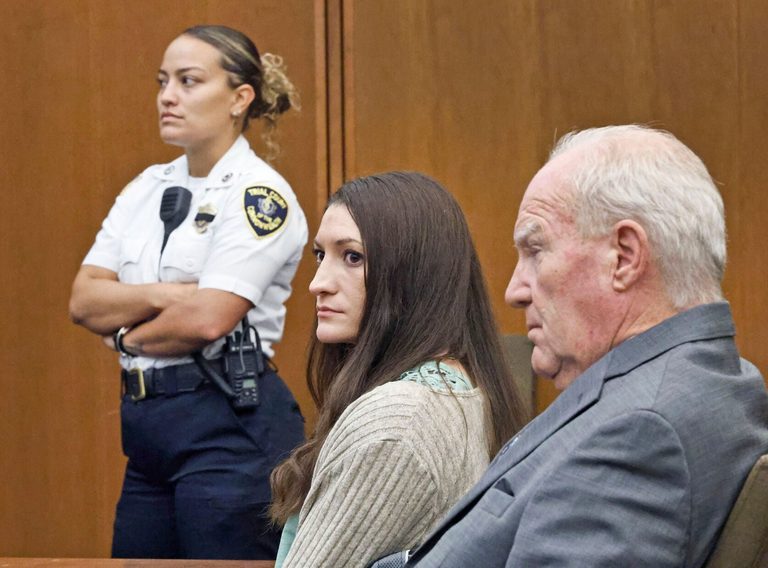
Plymouth, Massachusetts – The jury in the high‑profile Lindsay Clancy case reconvened Friday for the seventh day of deliberations after a startling development on Thursday. The foreperson disclosed that one juror would not accept Judge William Sullivan’s reminder about the legal standard of reasonable doubt.
Judge re‑examines juror understanding
Judge Sullivan, presiding over the trial, summoned each juror individually on Thursday to question their comprehension of the instructions. After hearing their responses, he reread the reasonable‑doubt standard before sending the group back to the courtroom.
When defense attorney Kevin Reddington asked the judge to dismiss the non‑compliant juror, prosecutors objected and the judge declined. “I don’t feel it is proper for me to side with one side or the other of the deliberations,” Sullivan said. “I have asked if they are able to follow my instructions. They swore earlier that they could.”
Clancy appears in courtroom
For the first time, Lindsay Clancy was brought to the bench for a sidebar conversation. The 36‑year‑old former labor‑and‑delivery nurse, who uses a wheelchair after a suicide attempt left her paralyzed from the waist down, was escorted to the front of the courtroom by her lawyer. “She has a right to know what’s going on,” Reddington told reporters.
Clancy does not deny that she strangled her three children – Cora (5), Dawson (3) and infant Callan (8 months) – in the basement of their home in 2023 before attempting to take her own life. Her defense argues that postpartum psychosis drove her actions, while prosecutors maintain she acted with full awareness.
Possible outcomes
If the jury cannot reach a unanimous verdict, Judge Sullivan may declare a mistrial. Prosecutors would then decide whether to retry Clancy, drop the charges, or negotiate a plea agreement.
Should the jury find Clancy criminally responsible, she could be convicted of either murder or manslaughter. Even an acquittal would not guarantee freedom; a judge could still order her confinement to a mental‑health facility if an evaluation deems her a danger to the public.
Public interest and broader implications
The livestreamed trial has drawn intense media attention and packed the courtroom, reflecting deep public divisions over maternal mental health and criminal responsibility. The case underscores the challenges courts face when balancing legal standards with complex mental‑health issues.
Local officials and mental‑health advocates have called for greater resources to support postpartum women, emphasizing that early intervention can prevent tragedies like this one. As the jury deliberates, the community watches closely, hoping for a resolution that upholds justice while acknowledging the profound impact of mental‑health crises.
Original reporting: KTBS 3 (Shreveport) — read the source article.