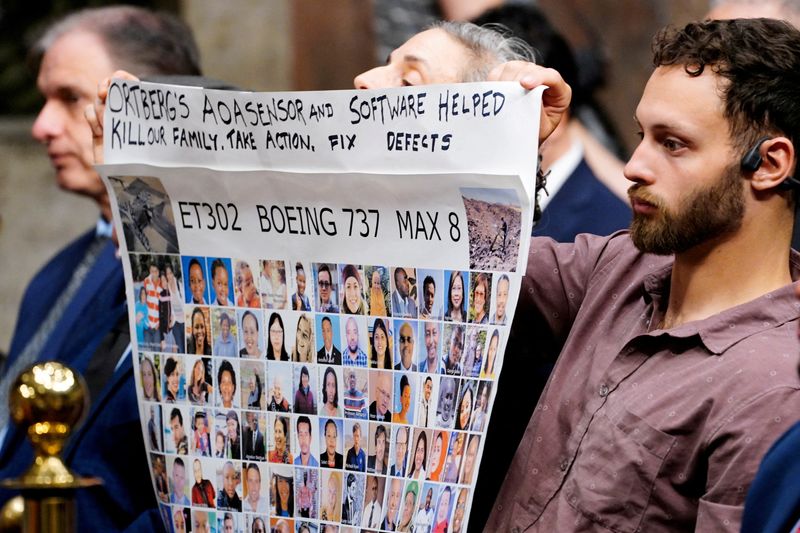
In Seattle, a federal jury found Boeing not guilty of hiding a safety change in 737 MAX jets sold to LOT Polish Airlines, resolving a high-profile civil claim tied to two fatal crashes in 2018 and 2019 and the global grounding that followed; the trial’s outcome included brief statements from Boeing and LOT and a jury that concluded after only three hours of deliberation. The case centered on LOT’s allegation that a critical change to the MAX flight-control software was withheld, and LOT had sought $153 million in damages connected to the months-long grounding. The ruling arrives amid ongoing scrutiny of the 737 MAX’s past problems and legal fights over responsibility, and the courtroom development was noted in coverage that referenced reporting from Seattle and editing by William Mallard.
The lawsuit accused Boeing of defrauding LOT by failing to disclose a change to the popular single-aisle jet’s flight-control systems, a change that the airline said was linked to two deadly crashes. Those crashes, one in 2018 and another in 2019, prompted aviation regulators around the world to ground the 737 MAX fleet for roughly 20 months while fixes and new procedures were developed and certified. LOT argued that grounding the jets cost the carrier tens of millions and sought $153 million in compensation for lost service and related impacts tied directly to that period of inactivity.
The trial in U.S. District Court in Seattle lasted two weeks before the case went to the jury, and after hearing testimony and evidence the jurors reached a decision in about three hours. That short deliberation time underscored how quickly the panel settled on Boeing’s innocence of the fraud claim, at least as it was presented in this courtroom. Jurors are tasked with weighing whether the airline proved deception under the law, and in this instance they concluded the evidence did not meet the standard required to award damages to LOT.
Boeing provided a concise public response after the verdict, writing plainly, “We are gratified by the jury’s verdict in our favor today.” That statement was delivered through the company’s spokesperson and framed as a clear reaction to the court’s finding that Boeing was not guilty of the alleged concealment. LOT also issued a short response acknowledging the outcome while signaling that its legal options were not exhausted, noting in its statement, “As the legal process may not yet be concluded, LOT will not comment further on the details of the proceeding at this stage.”
The dispute brought into focus both contractual expectations between manufacturers and buyers and the broader consequences of design changes whose implications touch safety, certification and airline operations. LOT claimed that the failure to disclose a risk introduced by the software change materially affected its decision-making and that the subsequent grounding caused quantifiable business harm. Boeing, by contrast, contested that characterization and successfully persuaded the jury that the airline’s legal theory did not prove deception as required under the law.
Courtroom outcomes like this one do not erase the earlier tragedy or the regulatory work that followed the crashes, but they do shape how future claims are litigated and how airlines and manufacturers negotiate around safety updates and disclosure. The 737 MAX saga prompted extensive reviews, new training requirements and adjustments to the jet’s systems, and lawsuits tied to that era have continued to work through courts in various forms. For LOT, the jury outcome in Seattle represents a setback in the specific civil claim for lost revenue, although public statements left open the possibility of further legal steps.
The verdict will likely be cited by both sides in the broader conversation about accountability, aviation safety and the commercial fallout from fleet groundings, and observers will watch whether LOT pursues an appeal or other remedies. For Boeing, the decision clears the company of civil liability to this particular customer on the fraud theory presented, while for LOT the decision closes a chapter in its attempt to reclaim financial losses tied to an unprecedented global grounding. The legal fight over the MAX’s troubled history continues to influence industry practices and inform how carriers and manufacturers prioritize transparency around technical changes.