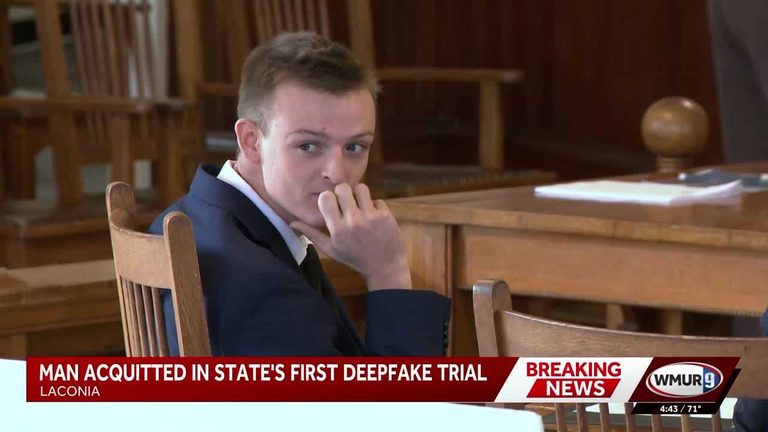
A Laconia jury delivered a swift verdict on Monday, finding 22‑year‑old Jaxen Cole not guilty of fraud for using a deepfake video that altered police body‑camera footage. The case, the first of its kind in New Hampshire, centered on whether a comedic, parody‑style video could be considered protected speech despite its use of an officer’s likeness.
Background and the alleged deepfake
In February 2025, Cole posted a clip from his 2024 arrest that showed the police body‑camera recording of his booking. A week later he uploaded a second version of the same footage, digitally altered so the officer appeared to praise Cole, ask for his autograph, and warn him not to share the video because it would be embarrassing. The caption, posted on Valentine’s Day, asked followers whether the officer wanted to be his valentine.
Laconia police were alerted the same day and opened an investigation. The officer testified that while his voice sounded similar, he never made the statements depicted in the altered video.
Prosecution and defense arguments
Prosecutor Alexander Smeaton argued that the video was created with the intent to harm the officer’s reputation. “A video can be intended as funny and still be produced for the purpose of embarrassing, humiliating or causing reputational harm,” he said.
Defense attorney Allison Ambrose countered that the officer or the city were never named and that the clip was clearly meant as entertainment for Cole’s social‑media followers. “It was a comedic video, clearly a joke, and the fact that the video used portions of the original footage doesn’t make it less of a parody,” Ambrose said. “In fact, the recognition of the original is part of what makes a parody work.”
Jury deliberations and verdict
The jury began deliberations at about 4 p.m. and returned a not‑guilty verdict roughly thirty minutes later. Cole expressed relief, noting the stress, loss of sleep, and financial strain the accusations had caused. “It’s a big weight off my back,” he said. “It was really hurting me mentally and financially, but it’s all good now. We’re all done.”
Implications for future cases
Cole hopes the outcome will guide future courts dealing with deepfake technology and alleged fraud. Legal experts note that the decision underscores the importance of distinguishing between malicious deception and protected parody, especially as AI‑generated media becomes more prevalent.
The case also highlights the challenges law enforcement faces in responding to rapidly evolving digital manipulation tools. While the state’s argument focused on potential reputational harm, the jury’s quick acquittal suggests a willingness to protect creative expression when it does not target a specific individual by name.
Community response
Local residents expressed mixed reactions. Some praised the verdict as a win for free speech and artistic humor, while others voiced concern about the ease with which deepfake technology can be misused. Lawmakers in the New Hampshire legislature have indicated they will monitor the situation and consider whether additional guidelines are needed to balance protection against defamation with First Amendment rights.
For now, the Laconia courtroom’s decision stands as a precedent in the ongoing national conversation about AI, parody, and the limits of legal liability.
Original reporting: KOAT Albuquerque — read the source article.