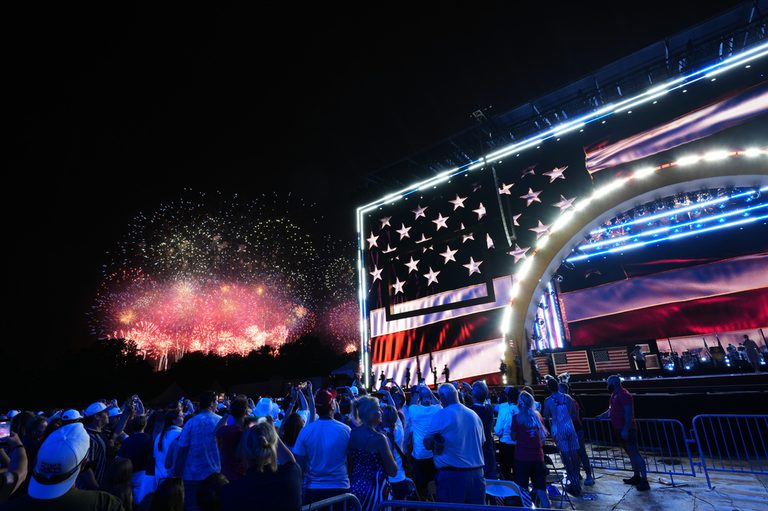
The recent July 4th celebrations were marked by numerous ironic juxtapositions, highlighting the complexities of American society. One notable example was the image of a lone black woman on a D.C. train, unmasked and stoic, surrounded by neo-Nazis too ashamed to show their faces.
Fireworks and Protests
A fireworks display in New York was so incompetently planned that it resembled the smoky sky over Tehran after Israeli airstrikes on Iranian oil refineries. Meanwhile, hundreds of Bostonians gathered peacefully under the Storrow Drive Underpass and sang ‘My Country ’Tis of Thee’ until the rain subsided.
Attendees at Trump’s Fair fought with guards who tried to evacuate them for their own safety. The event was also notable for the fact that six of the 26 players on the USA Men’s Soccer team were born outside the United States, a fact that was met with both pride and criticism.
Historical Context
July 4th commemorations have been ironic from the start. During the ‘Jubilee of Independence,’ two of the remaining Founding Fathers, John Adams and Thomas Jefferson, died on July 4, 1826 — 50 years to the day after signing the Declaration of Independence.
The Sesquicentennial Exposition of 1926, marking 150 years, didn’t fare much better. A lavish World’s Fair, which featured a heavyweight boxing match, lost millions of dollars and was deemed by the press at the time ‘America’s Greatest Flop.’ The Bicentennial year, 1976, was also the year of the first Earth Day, kicking off the modern environmental movement.
Original reporting: The Connecticut Mirror — read the source article.