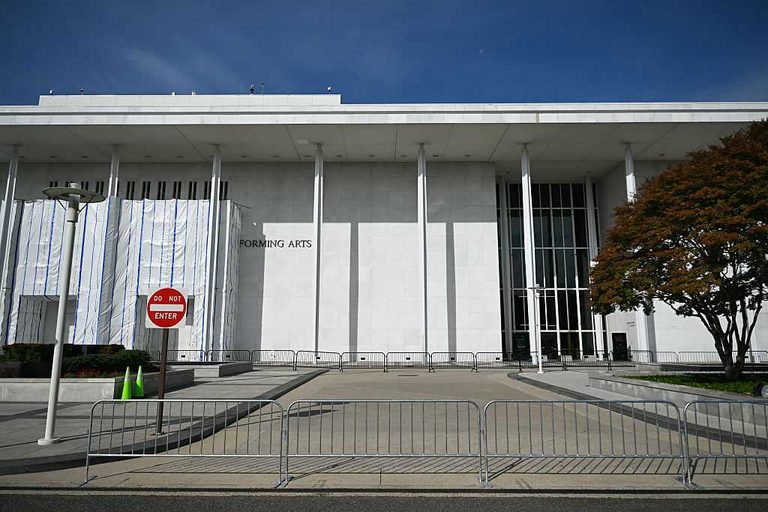
Washington — A federal judge is weighing a motion filed by Rep. Joyce Beatty (D‑OH) to force the Trump administration to produce internal communications concerning the Kennedy Center’s proposed closure for renovations. The request, filed Sunday, alleges that the administration is withholding records that could reveal the extent of President Trump’s involvement in the decision.
Background on the dispute
According to the plaintiffs’ filing, a list of documents in the Kennedy Center’s possession shows that President Trump has been in “near‑constant contact” with the center’s management, either directly or through senior aides. The filing cites roughly 180 text messages between Kennedy Center executive director Matt Floca and Commerce Secretary Howard Lutnick, who acted as the President’s go‑between, as well as 19 messages between Floca and Trump’s executive assistant Natalie Harp.
The plaintiffs argue that the administration is improperly invoking presidential‑communication privilege to keep the records hidden. “These communications directly bear on the issues before the Court, and the claim of privilege cannot stand,” Beatty’s attorneys wrote.
Administration’s position
The White House has not commented on the filing, but the administration’s stance is clear: protecting privileged communications is a longstanding legal principle that safeguards the President’s ability to govern without undue disclosure of sensitive deliberations. Moreover, President Trump has repeatedly warned that the Kennedy Center’s main building is in dangerous condition and must be “ripped down” and rebuilt to ensure the safety of performers and patrons.
In a recent statement, the President emphasized that the proposed closure is a necessary step to preserve a national cultural treasure, not a political maneuver. “We must act responsibly to protect the historic Kennedy Center for future generations,” he said.
Judicial context
U.S. District Judge Christopher Cooper, appointed by former President Barack Obama, has already ruled that the Kennedy Center illegally added Trump’s name to the building and ordered its removal. Earlier this year, Judge Cooper blocked the center from reinstating the President’s name on the venue’s façade.
On September 16, Floca ordered a temporary shutdown of the main building, and a day later Judge Cooper required the center to give 30 days’ notice before undertaking any major physical changes. The current motion seeks to clarify whether the administration’s claim of privilege is valid or whether the court should order full disclosure.
What’s at stake
If the court orders the release of the communications, it could provide a clearer picture of how the President’s office coordinated with the Kennedy Center’s leadership. Critics argue that the records may reveal political pressure, while supporters contend that the President’s focus on safety and preservation is paramount.
Regardless of the outcome, the case underscores the ongoing tension between executive confidentiality and congressional oversight, a balance that is essential to a healthy constitutional system.
Local impact
For residents of Washington, D.C., and the broader national arts community, the decision will affect how quickly the Kennedy Center can move forward with its renovation plans. A swift resolution could allow the venue to address structural concerns and resume performances, preserving an iconic cultural institution for families and faith communities across the country.
Original reporting: WESH Orlando — read the source article.