Baltimore’s latest city data shows 11,388 vacant houses – the lowest number in decades. The decline isn’t just from demolitions; rehabs are up, and the long‑delayed Second Baltimore Renaissance appears to be gaining momentum.
From blight to double‑wide homes
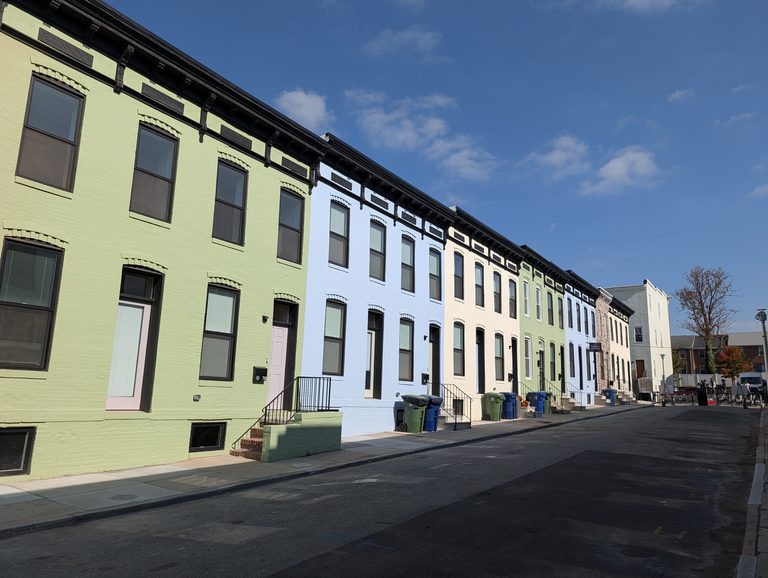
In 2023 the Abell Foundation reported nearly 15,000 vacant building notices, representing roughly $200 million in lost property‑tax revenue each year. Since then, ReBUILD Metro, working with Twopoint Studios and Clipper Construction, has combined 16 of 18 rowhouses on the 700 block of Mura Street into eight new double‑wide homes while preserving the original structures for longtime residents.
The effort has cut the block’s vacancy rate in half and the nonprofit says the overall Johnston Square vacancy rate has fallen to just 10%. Seven of the eight new double‑wides have been sold or are under contract, and another 22 abandoned houses are currently being rehabilitated.
Community and government partnership
Mayor Brandon Scott, City Council President Zeke Cohen, Councilman Jermaine Jones, and State Senator Cory McCray—all born in the early 1980s during the first Baltimore Renaissance—praised the project. Scott said, “To tackle a generational challenge like vacant housing, we can’t just rehabilitate one house at a time; we have to think bigger and look at entire blocks and neighborhoods.” Cohen called the street “the exemplar of what the Baltimore Renaissance can look like,” while Jones highlighted the preservation of the block’s history and McCray noted that “we are writing the story for our next generation.”
ReBUILD Metro’s work extends beyond Johnston Square into Greenmount West, Oliver, and Broadway East, contributing to population growth in those neighborhoods.
Why the turnaround matters
For decades, vacant homes lingered between 15,000 and 16,000 despite city efforts to seize and sell them. White flight and a population decline—from over 900,000 residents six decades ago to just under 600,000 today—left whole blocks abandoned. The recent reductions demonstrate that coordinated action among government agencies, nonprofits, community groups, and private developers can reverse that trend without displacing current residents.
As Baltimore continues to rebuild, the Mura Street project stands as a tangible sign that the city’s long‑awaited renaissance is underway.
Original reporting: Baltimore Fishbowl — read the source article.