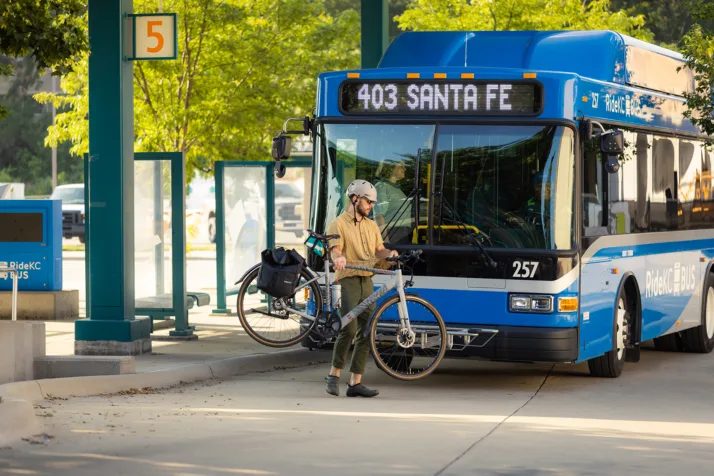
Johnson County transit officials warned commissioners Thursday that the county’s transit fund is dangerously low after COVID‑relief dollars ran out in 2024. The balance fell from $3.9 million in 2022 and $3 million in 2023 to only $148,204 last year. With half‑year fare revenues back in place, staff projects a year‑end balance of about $700,000—still below the five‑percent reserve needed for vehicle maintenance and replacement.
Commissioners approve a $600,000 general‑fund request
County Manager Penny Postoak Ferguson acknowledged the tight budget and rising gas prices, saying the timing of the request was “not ideal” but that the board has options. Commissioners asked staff to develop a proposal adding $600,000 from the general fund to the transit fund. The infusion would cover operating costs through the end of the year and begin addressing the aging bus fleet.
Staff also directed the board to pursue additional funding partners for the K‑10 Connector route, which runs from the University of Kansas‑Edwards Campus and Johnson County Community College to Lawrence. The route remains one of the county’s top five, delivering more than 50,000 rides in 2025, but the city of Lawrence stopped its $155,000 annual contribution about two years ago, leaving the county to shoulder the full cost.
Potential cuts to microtransit and paratransit under review
The discussion also covered the possible elimination of the ride‑hailing microtransit service and the K‑10 route if new partners cannot be found. Paratransit demand is soaring—up 69 % since 2021—as the population ages and some riders shift from microtransit. Staff warned that without action, the paratransit budget could overrun by $1.4 million this year.
Interim Transit Director Justus Welker noted that the county currently provides three paratransit options—RideKC Freedom, Freedom on Demand, and the SWIFT service—exceeding the minimum required by the Americans with Disabilities Act. While no immediate changes to paratransit were recommended, staff is already planning for 2027 and beyond, including possible fare tiers or trip limits.
Fleet aging and replacement timeline
Assistant County Manager Aaron Otto reported that 17 of the county’s 71 transit vehicles are at the end of their useful lives, with another 10 expected to reach that point within two years. Ordering a new bus typically takes about two years, underscoring the urgency of securing funding for replacements.
Commissioners considered a range of options, from doing nothing to adding $1 million to the fund. The $600,000 proposal was chosen because it yields the same year‑end balance as the “do nothing” scenario while allowing some vehicle needs to be addressed.
Commissioner viewpoints
Commissioners Becky Fast, Jeff Meyers, Janee Hanzlick and Shirley Allenbrand voted in favor of the request. Commissioner Michael Ashcraft, skeptical of the level of public‑transit spending, voted no, saying the current model is not sustainable. Commissioner Julie Brewer also voted no, preferring a smaller $400,000 addition.
Allenbrand emphasized the human impact, noting that many residents rely on transit to escape homelessness, reach jobs, and attend medical appointments. Fast called paratransit the county’s “number‑one priority” as the senior population grows.
Next steps
The board will task staff with finalizing a detailed $600,000 proposal and continuing the search for a partner to share the cost of the K‑10 Connector. If a partnership cannot be secured, the route could face elimination despite its strong ridership among students and faculty.
County officials remain hopeful that the general‑fund infusion, combined with potential new partnerships, will keep essential transit services operating for Johnson County residents through the end of the year and beyond.
Original reporting: Johnson County Post (Overland Park) — read the source article.