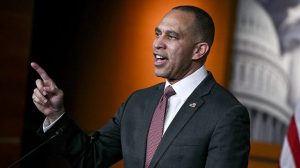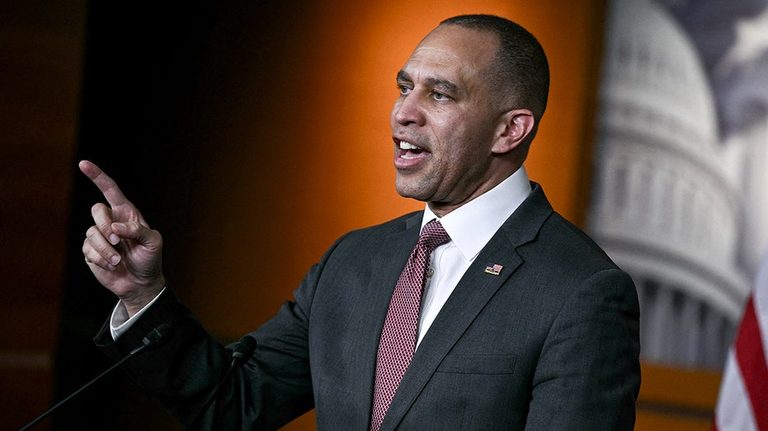
When Hakeem Jeffries, the newly confirmed speaker‑designate of the House, first told AIPAC in 2020 that New Yorkers consider Jerusalem the “sixth borough,” he was emphasizing his long‑standing support for Israel and the Jewish community. The clip has gone viral this week, just after Jeffries secured the Democratic caucus leadership with 251 votes in favor and 11 against.
Progressive backlash intensifies
Progressive members of the Democratic Party, including several who identify with the Democratic Socialists of America, have seized on the remark as evidence that the party’s leadership remains too cozy with pro‑Israel lobbying groups. The group is pushing a “Massie amendment” that would cut $3.3 billion in U.S. aid to Israel and pursue investigations into alleged war crimes in Gaza.
Democratic Reps‑elect Brad Lander and Scott Wiener have also called for a full embargo on Israel, joining a broader chorus that wants the United States to reevaluate its unconditional support for the Jewish state.
Jeffries’ response and rationale
Jeffries has pushed back against calls for a blanket termination of aid. In a July letter to his colleagues, he argued that Israel’s advanced economy can fund its own sophisticated weapons and that any future security arrangement should be consistent with agreements the United States has with other Western allies. He wrote, “America’s commitment to Israel’s right to exist as a Jewish and democratic state and homeland for the Jewish people must remain ironclad.”
While he has expressed concern over civilian casualties in Gaza, Jeffries stopped short of labeling the conflict a genocide, a term increasingly used by the progressive wing. He stressed that a “meaningful change in direction” is needed, but that a total cessation of aid would undermine U.S. strategic interests in a region he described as “an incredibly tough neighborhood” surrounded by hostile actors.
Political stakes for the speaker‑designate
Jeffries’ ability to navigate this intra‑party divide will be tested when the full House votes on the speaker in January. He will need a simple majority of the 435‑member chamber, meaning he must win over not only the moderate wing of his party but also enough Republicans or independents to offset the progressive bloc.
The progressive push to cut aid aligns with a broader trend of the Democratic Party’s leftward shift on foreign policy, especially after the October 2023 Hamas attack on Israel. Critics such as Rep. Thomas Massie, a Republican from Kentucky, have also advocated for a $3.3 billion reduction in aid, showing that the debate crosses party lines.
What this means for constituents
For New Yorkers and other Americans who value a strong U.S.–Israel partnership, Jeffries’ comments reaffirm his commitment to that alliance. For those who view unconditional aid as morally untenable, the resurfaced remark fuels calls for a more critical review of U.S. policy. As the speaker‑designate, Jeffries will have to balance these competing pressures while steering the House through a turbulent legislative session.
Both sides of the debate have cited their affiliations: progressive critics are linked to the DSA and various anti‑war advocacy groups, while Jeffries’ defense draws on statements from senior administration officials and traditional pro‑Israel organizations.
Original reporting: Fox News (HLL/CB) — read the source article.