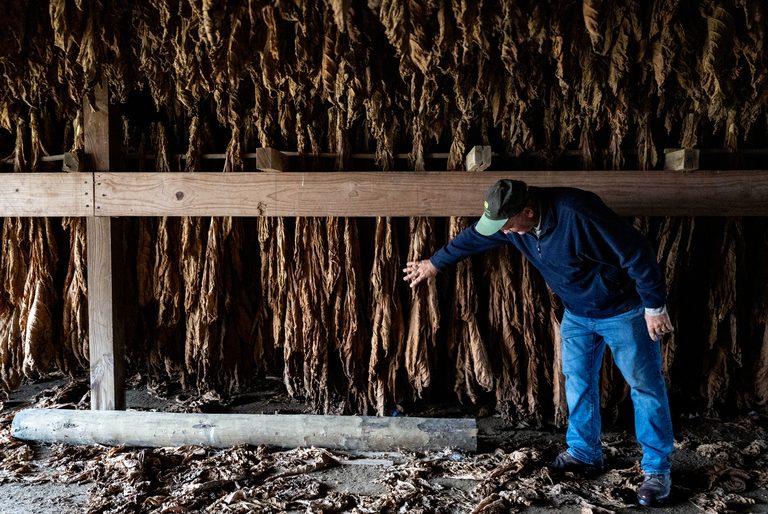
Madison, IN – Darrell Smith, a 66‑year‑old tobacco farmer in Jefferson County, recalls the bustling opening‑day auctions that once filled the city’s warehouses with celebration. Up until the late 1990s, politicians, officials and residents gathered to watch the crop be sold to cigarette manufacturers, with the school band playing festive tunes.
From a state‑wide staple to a dying crop
For more than a century, Indiana’s “Prize Hoosier State Burley” was a major agricultural product. In 1997, growers in 37 counties planted 8,900 acres, producing 18 million pounds and ranking the state eighth nationally. Today, only about 25 farms remain, most clustered around Jefferson County, and the 2022 USDA Census recorded just 933,000 pounds statewide.
Federal program loss and market shifts
The decisive blow came in 2004 when lawmakers ended the Federal Tobacco Program, a subsidy scheme first enacted in 1938 that guaranteed stable prices for small growers. Without those guarantees, many family farms found tobacco too risky and exited the market, while larger operations expanded to secure direct contracts with companies such as Philip Morris and RJ Reynolds.
Lonnie Mason, a retired Purdue Extension specialist who worked with tobacco growers for four decades, explains that the program’s limits allowed small farms to profit on modest acreages. After the limits were lifted, Smith increased his own acreage from roughly 25 to 45 acres and now sells directly to the major manufacturers.
Declining demand and labor shortages
Smoking rates have plummeted, falling from 43 % in 1965 to 12 % in 2022, with high‑school use dropping from 36 % in 1997 to 4 % in 2021, according to the CDC. This reduced demand is the primary driver of the crop’s contraction.
Smith also faces a chronic labor shortage. Tobacco cultivation is labor‑intensive – each acre holds over 7,000 plants that must be hand‑harvested, hung on sticks, cured in barns, then stripped and baled. Since 2019, Smith has relied exclusively on Mexican migrant workers; when they indicate they will not return, his operation cannot continue.
Equipment, costs, and the future
Finding replacement equipment has become nearly impossible; the wooden sticks once made locally are no longer produced in Indiana, and Smith still uses a sprayer from the 1980s. Rising diesel and fertilizer prices add further strain, forcing him to drive six hours to processing facilities in Kentucky, a stark contrast to the 40‑minute trips to Madison warehouses of the past.
Smith’s three children have stable, well‑paying jobs and show no interest in taking over the labor‑heavy crop. An 85‑year‑old neighbor still helps strip leaves after harvest, preserving a cherished tradition, but the outlook remains bleak. Mason predicts that within the next two decades the remaining farms will largely exit, leaving perhaps two or three growers still in business.
Community impact
The decline of tobacco farming erodes a cultural heritage that once united families and the wider community during annual auction celebrations. While the industry’s contraction reflects broader public‑health progress, it also underscores the challenges faced by rural Indiana families striving to preserve their way of life.
Original reporting: Mirror Indy — read the source article.