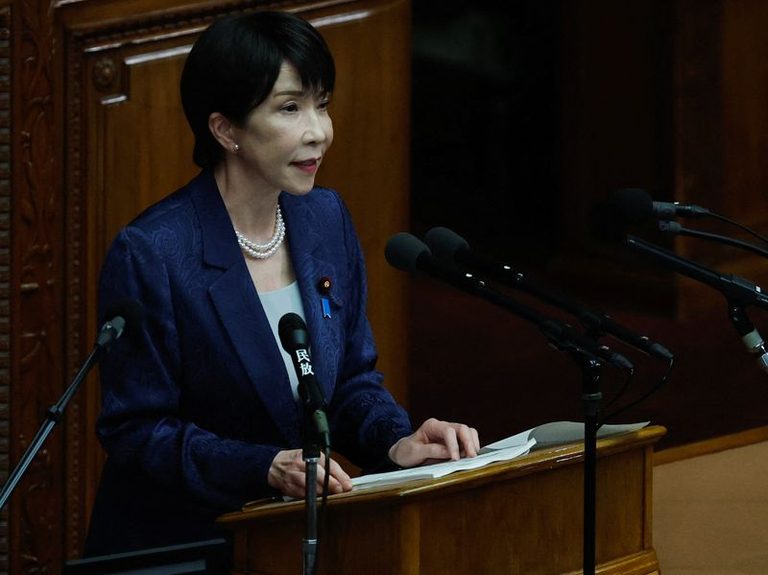
Tokyo – In a policy speech to an extraordinary session of parliament on Monday, Prime Minister Sanae Takaichi promised to rein in government bond issuance and act quickly if market conditions worsen. The pledge comes as investors grow nervous about Japan’s soaring public debt and the recent spike in 30‑year Japanese government bond (JGB) yields.
Fiscal sustainability as a priority
“Fiscal sustainability is obviously a prerequisite in pursuing our ‘responsible and proactive’ fiscal policy,” Takaichi told lawmakers. She said the administration will keep annual bond issuance in line with tax revenues, interest‑rate trends, debt‑financing costs and overall economic conditions.
The premier emphasized that the government will continue to fund growth‑oriented spending, including a review of existing tax breaks and subsidies, while seeking private investment for long‑term projects. “We will implement policies steadily, get things done one by one, and communicate them carefully to the public and markets,” she added.
Bond market pressure
On Monday, the 30‑year JGB yield reached a record high of 4.235%, driven by concerns that increased debt issuance could fuel inflation, especially as the Middle East conflict adds to global uncertainty. Japan’s public debt, roughly twice the size of its economy, is the largest among developed nations. Funding costs are rising as the Bank of Japan raises rates and scales back its massive bond‑purchase program.
While the administration plans to expand spending to boost growth potential, Takaichi stressed that borrowing will be calibrated to revenue and market realities. “If the economy and markets make unexpected moves, we will scrutinise their impact and respond nimbly as needed,” she said, without providing further detail.
Legislative agenda
The immediate legislative focus is a two‑year tax cut on food items slated to begin next April. Critics warned that the proposal could trigger a bond sell‑off because the government has not yet explained how it will cover the resulting revenue shortfall. In addition, ministries are preparing next year’s budget, seeking record‑level spending for strategic economic‑security initiatives.
Tokyo also plans to set aside multi‑year funds for projects deemed vital to the nation’s economic security, a move that aligns with the administration’s broader goal of attracting private capital to high‑growth sectors.
Implications for investors
Market observers note that the prime minister’s commitment to tighter bond discipline may help stabilize yields, but the success of the plan will depend on how the government balances its ambitious spending agenda with the need to keep debt costs manageable. The administration’s willingness to adjust borrowing in response to market signals is a positive signal for investors seeking predictability.
Overall, Takaichi’s speech underscores the delicate balancing act facing Japan’s leadership: fostering growth through targeted fiscal stimulus while maintaining confidence in the nation’s fiscal health.
Original reporting: Appleton, WI News Feed (HLL/CB) — read the source article.