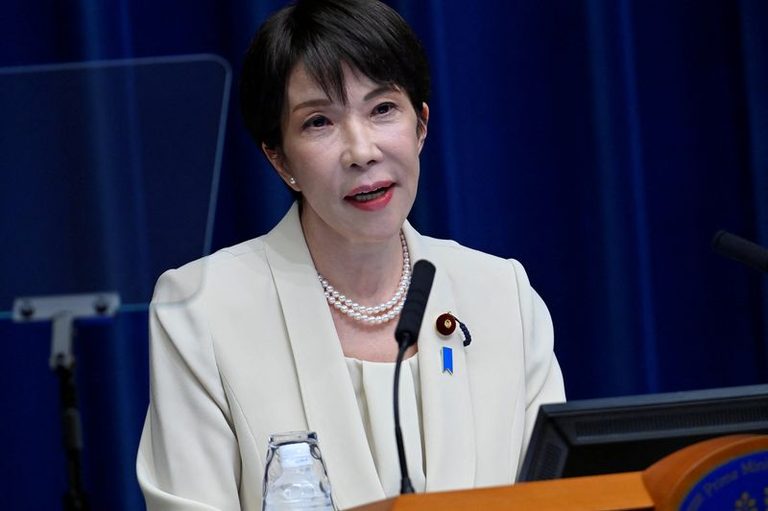
Tokyo – Prime Minister Sanae Takaichi is set to announce a cabinet reshuffle on Thursday that will keep several of her senior ministers in place. The move is intended to provide stability for her flagship fiscal agenda while she seeks broader political support ahead of a leadership contest within the ruling Liberal Democratic Party (LDP) next September.
Key retainments signal continuity
Sources close to the administration tell Reuters that Satsuki Katayama will remain as finance minister. Katayama, a former finance‑ministry bureaucrat known for a conservative stance on fiscal matters, helped negotiate a rare joint U.S.–Japan yen intervention with Treasury Secretary Scott Bessent in late July. Keeping her in the finance post is expected to reassure bond markets that Japan’s exchange‑rate policy will stay on a steady course.
In addition, the Yomiuri newspaper reports that Minoru Kiuchi will stay on as economic revitalisation minister. Kiuchi is a close ally of Takaichi and shares her “reflationist” view that strategic government spending can boost growth, even as Japan’s public debt now exceeds twice the size of its economy.
Balancing fiscal ambition with market concerns
Analysts note that retaining Katayama may temper investor worries about Takaichi’s expansionary fiscal approach, which could increase debt issuance. The 10‑year Japanese government bond (JGB) yield has risen to three‑decade highs this week, reflecting heightened sensitivity to the government’s borrowing plans.
Nevertheless, Takaichi appears unwilling to scale back her large‑scale spending program. She is expected to push forward a two‑year cut in the sales tax on food items and a broader package of infrastructure and social‑welfare projects. Critics argue that such measures could further strain the budget, while supporters contend they are necessary to revive household consumption and counteract the rising cost of living.
Political calculus ahead of party leadership race
Economist Takahide Kiuchi of Nomura Research Institute suggests the reshuffle is less about policy colour and more about securing a stable platform for Takaichi’s bid to retain the LDP’s top job. By emphasizing continuity, she hopes to appeal to both the party’s conservative base and moderate legislators who favour fiscal prudence.
Domestic media also indicate that other senior figures, including Foreign Minister Toshimitsu Motegi and Defence Minister Shinjiro Koizumi, will likely keep their portfolios. Maintaining these allies helps Takaichi project unity within the party and signals to coalition partner Japan Innovation Party that their policy cooperation will continue.
Parliamentary debate and opposition scrutiny
The newly formed cabinet will soon face a parliamentary debate on key fiscal proposals, notably the two‑year food‑tax cut. Opposition parties have pledged to question how the government intends to fund the initiative, given the pledge to cap new bond issuance around 40 trillion yen for the fiscal 2027 budget.
Japan also confronts a looming defence‑spending review, as the government evaluates higher allocations in response to regional security challenges. The central bank’s gradual tightening – raising interest rates and scaling back bond purchases – adds further pressure on the cost of servicing the nation’s debt.
Outlook
By retaining core ministers, Prime Minister Takaichi aims to blend policy continuity with the political momentum needed for her upcoming leadership contest. Whether this strategy will satisfy market demands for fiscal discipline while delivering her ambitious spending agenda remains to be seen.
Original reporting: Appleton, WI News Feed (HLL/CB) — read the source article.