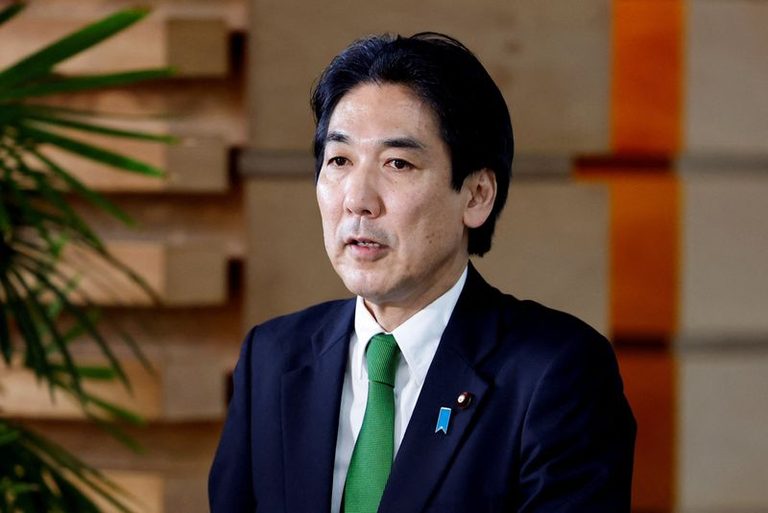
Tokyo – In a news conference on Friday, Economy Minister Minoru Kiuchi asserted that Japan’s economy has emerged from a deflationary period and therefore does not need the excessively loose monetary policy that was a hallmark of the Abenomics era.
“Japan has emerged from an era where it needed the kind of reflationist policies taken under Abenomics,” Kiuchi said, noting that Prime Minister Sanae Takaichi’s current approach differs from the massive stimulus introduced by former premier Shinzo Abe in 2013.
He added, “What I mean to say is that Japan is no longer in a deflationary period, and therefore does not need excessively loose policy that pursues inflation.” Kiuchi stopped short of commenting on whether the government opposes further interest‑rate hikes by the Bank of Japan, reminding reporters that monetary policy decisions are the jurisdiction of the central bank.
The remarks came after reporters asked about a summary of opinions from the Bank of Japan’s September policy meeting, which showed a government representative urging caution over additional rate hikes. Kiuchi’s comments reinforce a broader government narrative that Japan is no longer pursuing reflationist policies to boost demand through expansive fiscal or monetary steps.
Government’s Position on Reflation
Finance Minister Satsuki Katayama recently told U.S. Treasury Secretary Scott Bessent that Prime Minister Takaichi is not a reflationist. While Kiuchi has been labeled a reflationist in the past because of his cautious stance toward rate hikes and his association with lawmakers advocating expansionary spending, his latest statements suggest a shift toward acknowledging the economy’s improved price dynamics.
Analysts note that Japan’s core consumer‑price index has shown modest gains in recent months, prompting debate over whether the Bank of Japan should continue its ultra‑low‑interest‑rate policy. Kiuchi’s comments signal that the administration believes the economy can sustain higher inflation without relying on overly accommodative monetary conditions.
Implications for the Bank of Japan
The Bank of Japan, which has maintained a negative‑interest‑rate policy and large‑scale asset purchases since 2016, will now face pressure to justify its stance in light of the minister’s remarks. While the central bank retains formal independence, the government’s public messaging can shape market expectations and influence the timing of any policy adjustments.
Market participants will be watching upcoming BOJ meetings closely to see whether the central bank signals a move toward normalising rates or continues its current trajectory. Kiuchi’s emphasis on the economy’s exit from deflation may encourage the BOJ to adopt a more gradual approach to tightening, balancing the need to prevent a return to price declines with the goal of sustaining steady growth.
Broader Economic Context
Japan’s shift away from deflation follows years of structural reforms, demographic challenges, and a global environment of low growth. The government’s stance reflects confidence that recent policy adjustments, including modest fiscal stimulus and structural reforms, have helped stabilize prices.
Observers caution that external factors—such as global commodity price volatility and exchange‑rate fluctuations—could still affect Japan’s inflation trajectory. Nonetheless, Kiuchi’s statement underscores a belief that the country no longer requires the aggressive monetary easing that characterized the early Abenomics years.
Original reporting: Appleton, WI News Feed (HLL/CB) — read the source article.