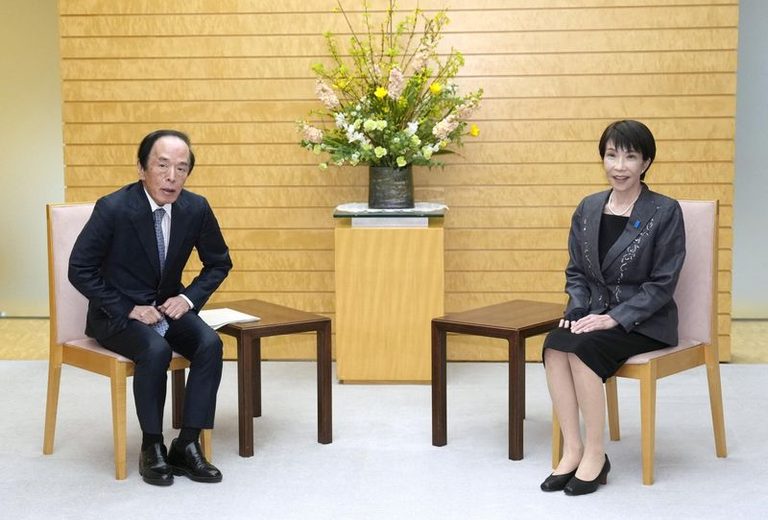
The Bank of Japan is facing pressure from the government to slow down its interest rate hikes. Prime Minister Sanae Takaichi’s administration is pushing for lower borrowing costs to boost economic growth.
Government Influence
The government’s efforts to influence the Bank of Japan’s monetary policy decisions are seen as a sign of a dovish shift. The administration is expected to finalize its economic blueprint in July, which will call for monetary policy to align with government efforts to promote growth.
The Bank of Japan has been raising interest rates to combat inflation, but the government is concerned that higher rates could hurt the economy. The bank’s governor, Kazuo Ueda, has been absent due to health issues, and his successor may be chosen by Takaichi, who is expected to appoint a more dovish policymaker.
Market Expectations
Most analysts expect the Bank of Japan to raise interest rates to 1.25% by the end of the year and to 1.5% by mid-next year. However, the government’s pressure on the bank could delay or reduce the pace of rate hikes.
The yen has been weakening against the US dollar, which has made imports more expensive for Japanese households. The Bank of Japan’s decision to raise interest rates in June has failed to reverse the yen’s decline.
Original reporting: Appleton, WI News Feed (HLL/CB) — read the source article.