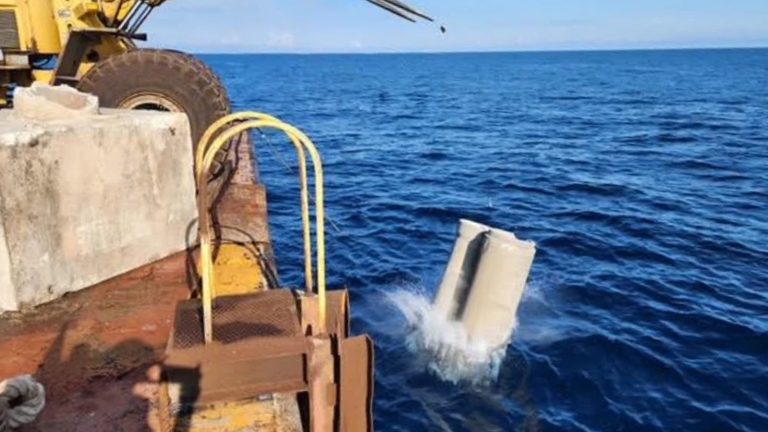
In late June, the Jacksonville Offshore Sport Fishing Club helped launch a new artificial reef about 28 miles off the Mayport Jetties at a site known as Harm’s Ledge. The reef, built from concrete culverts, pipes and other reclaimed automotive components, now rests on the Atlantic Ocean’s sandy bottom at roughly 90 feet depth.
Local collaboration brings the reef to life
The project began as a 2025 grant application and grew into a partnership among the fishing club, the city’s Waterways Commission, the Florida Fish and Wildlife Conservation Commission, the U.S. Fish and Wildlife Service, private‑sector sponsor Mobro Marine, and other community donors. Reef Development Director Paul Malone said the installation marks “the beginning” of a long‑term program to create more offshore habitat and boost recreational fishing and diving for generations of Northeast Florida residents.
How the reef was built
More than 190 concrete pieces were loaded onto a barge, secured with a forklift, and towed to the designated site. Once positioned, the structures were lowered to the seabed, where they will serve as a substrate for coral, algae and other marine organisms. Over time, the growing ecosystem is expected to attract fish, crustaceans and other wildlife, enhancing the local fishery.
Historical context and future plans
This is Jacksonville’s first major artificial‑reef installation in several years, but it follows earlier efforts such as the Charles H. Kirbo Memorial Reef, where 500 dome‑shaped “Reef Balls” were placed off the coast in 2000‑2001 with help from volunteers, including students from Mandarin High School. The new reef is part of a broader initiative led by the nonprofit “Think It, Sink It, Reef It,” which designs reef concepts using recycled materials.
Club officials and partners view the project as a model for future offshore reef development in Northeast Florida. By providing critical habitat, the reef aims to support both the region’s marine environment and its outdoor‑recreation economy, offering anglers, divers and other enthusiasts new opportunities to enjoy the Atlantic waters.
Original reporting: Jacksonville Today — read the source article.