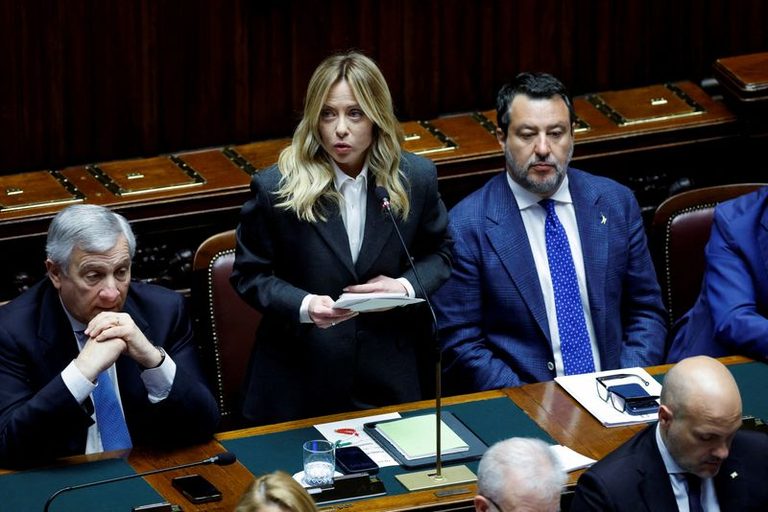
Italy’s lower house of parliament on Thursday approved a highly contested government plan to overhaul the electoral law, a move opponents denounced as an attempt to help Prime Minister Giorgia Meloni retain power in the next election due in 2027.
Electoral Reform Details
The proposal by the ruling right-wing coalition, comprising Meloni’s Brothers of Italy, the League and Forza Italia, would introduce a fully proportional system while guaranteeing a majority to any bloc winning more than 42% of the vote.
Winners surpassing that threshold would receive a bonus of 70 seats in the 400-member lower house and 35 seats in the 200-member Senate. However, their total representation would be capped at 220 and 113 seats respectively, in a bid to avoid overly large majorities.
Debate over the reform exposed tensions within the alliance. On Tuesday, lawmakers rejected a government proposal to allow electors to express preference votes for candidates on party lists, partly due to coalition defections.
Impact on Future Elections
The reform would abolish the first-past-the-post seats, including in southern Italy where the centre-left alliance led by the Democratic Party (PD) and the 5-Star Movement is seen as particularly competitive.
Government supporters say the reform would guarantee that a stable majority comes out of the vote. Meloni is due to become Italy’s longest-serving postwar prime minister in early September, after presiding over an unusually prolonged period of stability.
The rise of a new far-right movement has unsettled Meloni’s camp in recent months, siphoning support from the ruling coalition and raising questions about its prospects at the next election.
Original reporting: Appleton, WI News Feed (HLL/CB) — read the source article.