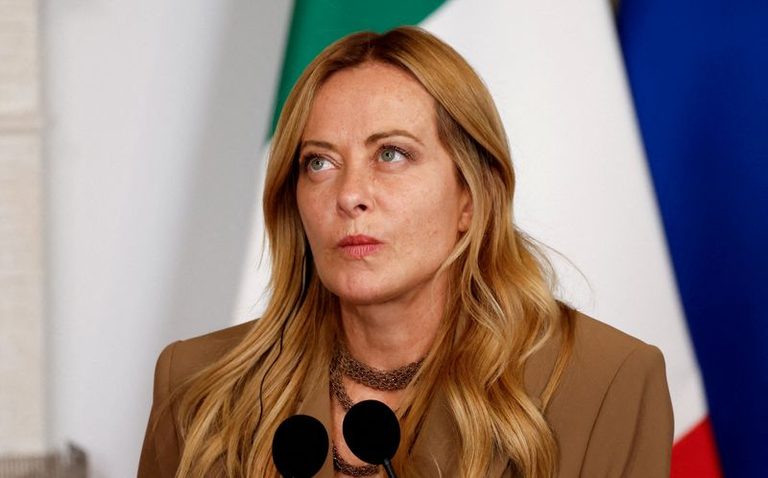
Rome – A decree issued by Prime Minister Giorgia Meloni this week sets a ceiling of 30% immigrant students per classroom and bans face coverings in schools. While critics framed the move as a political maneuver ahead of next year’s elections, analysts stress that the practical impact will be minimal.
Limited scope of the rule
Costanzo Ranci, head of the Social Policy Lab at Milan Polytechnic, told Reuters the limit is expected to affect roughly 300 children across Italy, with an upper bound of 1,000 and the possibility of zero impact. The government has not released its own estimate.
The decree excludes immigrant students who were born in Italy or who have spent a substantial period in the Italian school system. According to the latest education ministry data for August 2025, Italy’s state schools serve about 6.2 million students.
Where the threshold applies
In the 2024‑2025 school year, around 2,600 schools – about 9% of the total – had more than 30% immigrant students. However, 64.5% of those students are Italian‑born, meaning they are not subject to the new rule. If that national share is applied uniformly, only ten state schools would remain above the threshold.
Ranci summed up his view: “My feeling is that the decree will not have a real impact on the day‑to‑day running of schools.” He added that the measure would apply only in exceptional situations.
Political context
Meloni’s right‑wing cabinet presented the decree as a common‑sense step to promote integration, avoid “ghetto classes,” and give all students equal opportunities. Critics argue the timing is intended to counter the rising popularity of the far‑right party National Future ahead of the 2027 elections.
Supporters of the policy point to the desire for parental choice and community cohesion, values that align with traditional family and faith‑based perspectives. They argue that limiting the concentration of immigrant students can help maintain a shared cultural environment in classrooms.
What parents can expect
For most families, daily school life will remain unchanged. The rule’s enforcement will likely be limited to a handful of schools where immigrant enrollment exceeds the 30% ceiling and where students are not Italian‑born. In those rare cases, school administrators will need to adjust class composition to comply with the decree.
Overall, the data suggest that the policy’s reach is narrow, and its effect on the broader Italian education system will be negligible.
Original reporting: Appleton, WI News Feed (HLL/CB) — read the source article.