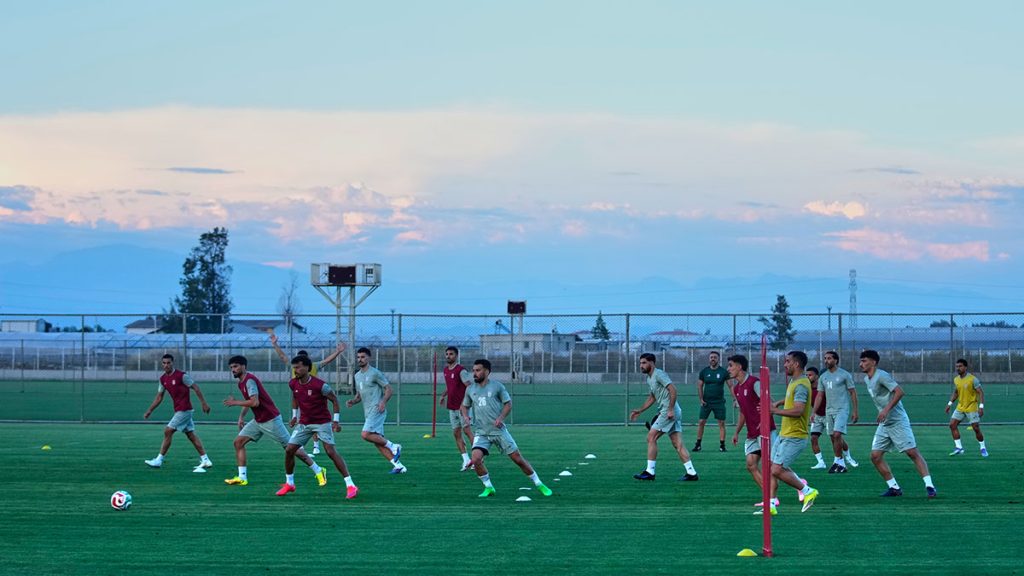
In a significant development for international sports, Iran’s World Cup soccer team has been approved for visas to enter the United States. This approval allows them to participate in their scheduled matches near Los Angeles this month. The team had been training in Tijuana, Mexico, due to earlier complications in securing U.S. visas, which were exacerbated by Iran’s ongoing conflict with Israel and the United States.
Visa Approval Process
According to U.S. officials, all players on the Iranian team have been approved for visas, and the process of issuing these visas is underway. The approvals extend to coaches, trainers, and some support staff. However, it remains unclear if any applicants associated with the team were denied visas, as one official suggested some might have been rejected for applying under false pretenses.
The Iranian team had initially planned to train in Tucson, Arizona, but visa processing issues prompted a move to Tijuana, Mexico. The U.S. Embassy in Ankara, Turkey, played a crucial role in processing the visas, with U.S. Ambassador to Turkey Tom Barrack emphasizing the unifying power of sports in his remarks.
Upcoming Matches
Iran is set to play its first two World Cup matches in Inglewood, California, facing New Zealand on June 15 and Belgium on June 21. The team will then travel to Seattle to compete against Egypt on June 26. There is a possibility of Iran facing the United States in the round of 32 on July 3 in Arlington, Texas, if both teams place second in their respective groups.
Political and Social Context
The Iranian team’s participation in the World Cup has been fraught with political challenges. President Donald Trump had previously expressed concerns about Iran’s involvement, citing issues of player safety. Despite these concerns, Iran’s national team asserted its right to participate, stating that no one could exclude them from the tournament.
Internally, Iran’s sports minister had initially declared participation in the World Cup as impossible, but the country’s soccer federation proceeded with preparations. The federation insisted on securing visas for all players and staff, including those with military service in the Islamic Revolutionary Guard Corps.
This development highlights the complexities of international sports amidst geopolitical tensions, as well as the enduring spirit of competition that transcends borders.
Original reporting: NBC10 Boston — read the source article.