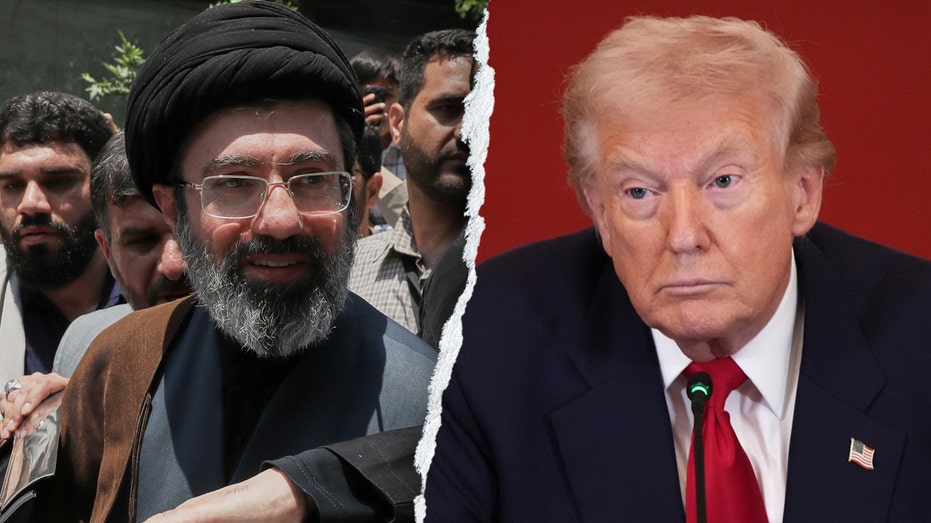
In a significant geopolitical development, Iran’s supreme leader, Mojtaba Khamenei, has called for a coalition of Middle Eastern nations to oppose American influence in the region. This move comes as a direct response to President Donald Trump’s recent efforts to broaden the Abraham Accords, which aim to normalize relations between Israel and several Arab nations.
Iran’s Strategic Positioning
Khamenei’s call for a “New Islamic Civilization” was made public on May 26, shortly after Trump’s discussions with leaders from Saudi Arabia, the United Arab Emirates, Qatar, Turkey, Pakistan, Egypt, Jordan, and Bahrain about expanding the 2020 Abraham Accords. Khamenei’s message, disseminated via social media, emphasized unity among Islamic countries to address regional challenges and resist American military presence.
Dr. Omar Mohammed, a counterterrorism expert, explained that Khamenei’s rhetoric seeks to consolidate the Muslim world under Iran’s leadership, positioning it against the American-led order. This strategy directly challenges the narrative of the Abraham Accords, which aim to foster peace and cooperation in the region.
Regional Reactions and Concerns
Despite Iran’s aggressive stance, including recent military actions against neighboring countries like Bahrain, Qatar, the UAE, and Kuwait, Gulf states remain wary of Tehran’s intentions. Mohammed noted that these nations are skeptical of Iran’s overtures, especially given the recent history of hostility and aggression.
The expert further highlighted that while Gulf capitals are cautious of Khamenei’s invitation, they are equally concerned about potential agreements between Washington and Tehran. There is apprehension that any deal might empower Iran financially and militarily, despite its recent attacks on these very nations.
Implications for US Foreign Policy
The ongoing negotiations between Iran and the United States add another layer of complexity to the situation. President Trump’s administration has yet to finalize any peace agreement, leaving the region in a state of uncertainty. The outcome of these talks could significantly impact the geopolitical landscape, influencing alliances and power dynamics in the Middle East.
As Iran positions itself as a regional leader, the United States faces the challenge of maintaining its influence and ensuring the security of its allies. The evolving situation underscores the delicate balance of power in the Middle East and the critical role of diplomatic engagement in addressing regional tensions.
Original reporting: Fox News (HLL/CB) — read the source article.