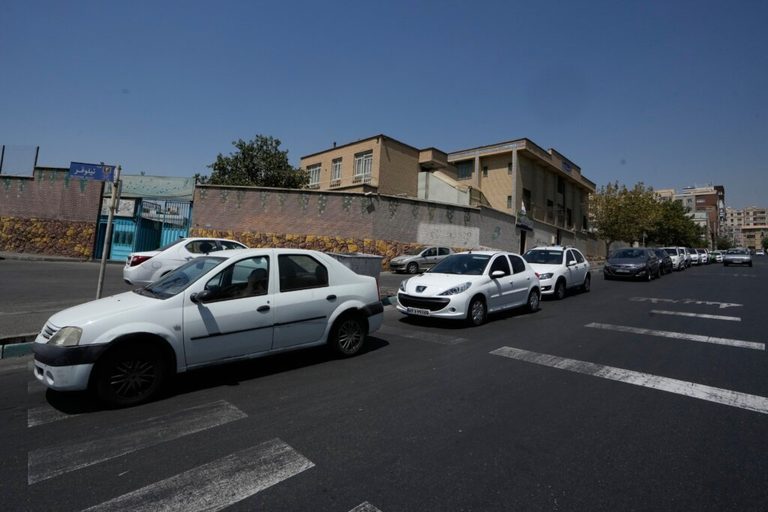
Tehran residents are waiting up to two hours at gas stations as the United States intensifies its economic pressure on Iran. The latest sanctions, announced by U.S. Treasury Secretary Scott Bessent, aim to cut the country off from the global economy and target sectors that support ordinary Iranians.
Local impact on drivers and shoppers
Hashem Abadi, a 34‑year‑old barber, said he now rushes to the pump as soon as his tank reaches half full, fearing a future shortage. Taxi driver Mahmoud Chavoshi, 51, noted that fuel prices are expected to rise, adding that everyday items from milk to pasta have become more expensive.
While fuel lines have grown, banks, grocery stores and pharmacies remain largely stocked. Still, shop owners such as Morteza Daryani, who runs a Tehran grocery, report customers buying now and paying later because “their pockets are not as full as before.”
Government response
Iranian President Masoud Pezeshkian accused the United States of using economic pressure after failing to achieve a military victory. He rejected the notion of surrender, saying Iran will not bow to the sanctions.
Economists warn that sustained inflation, a record‑low rial and dwindling purchasing power could eventually spark unrest. Mohammad Farzanegan, a professor of Middle Eastern economics at the University of Marburg, said the combination of economic strain and diplomatic setbacks could push public frustration to a breaking point.
Broader economic context
Iran’s economy has long relied on oil sales to China as a lifeline. The new U.S. measures target digital assets, gold, technology, aviation and shipping—areas that, according to Esfandyar Batmanghelidj of the Bourse & Bazaar Foundation, are lifelines for the Iranian people rather than the state.
The most immediate pressure comes from a naval blockade that restricts oil and gas shipments. The United Arab Emirates recently announced it would cut all trade and financial transactions with Iran, a move analysts link to Bessent’s threat of secondary sanctions on third‑party countries.
Potential global ripple effects
Iran has responded by largely closing the Strait of Hormuz, a key waterway that moves about one‑fifth of the world’s oil and gas. Analysts suggest Tehran hopes the resulting impact on global markets and U.S. gasoline prices ahead of the midterm elections will force a policy reversal.
“Both clocks are ticking,” said Sascha Bruchmann of the International Institute of Strategic Studies. “Iran’s blockade and the U.S. sanctions are each betting the other will yield first.”
For now, ordinary Iranians continue to line up for fuel, balancing daily expenses against an uncertain economic future.
Original reporting: Alexandria, VA News – WTOP News — read the source article.