The Bureau of Labor Statistics data released in May shows grocery bills jumped sharply in April, lifting fresh debates in Washington and on farms from Bluffton, Georgia to national policy forums; farmers like Will Harris and economists at Bank of America and the Federal Reserve Bank of New York weigh in as food-at-home costs climb amid energy pressures tied to the Iran war and global supply shocks.
Official figures put the “food at home” category up 0.7% in April, the biggest single-month grocery increase in nearly four years, reversing a small decline from March. Over the past year grocery prices are about 2.9% higher, and that steady rise is starting to bite into household budgets across income levels.
The month-to-month swing was dramatic: after a 0.2% drop in March, April’s rebound surprised many analysts and shoppers alike. That kind of volatility matters because families price things in weekly and monthly, not annually, and sudden spikes force immediate choices in pantries and carts.
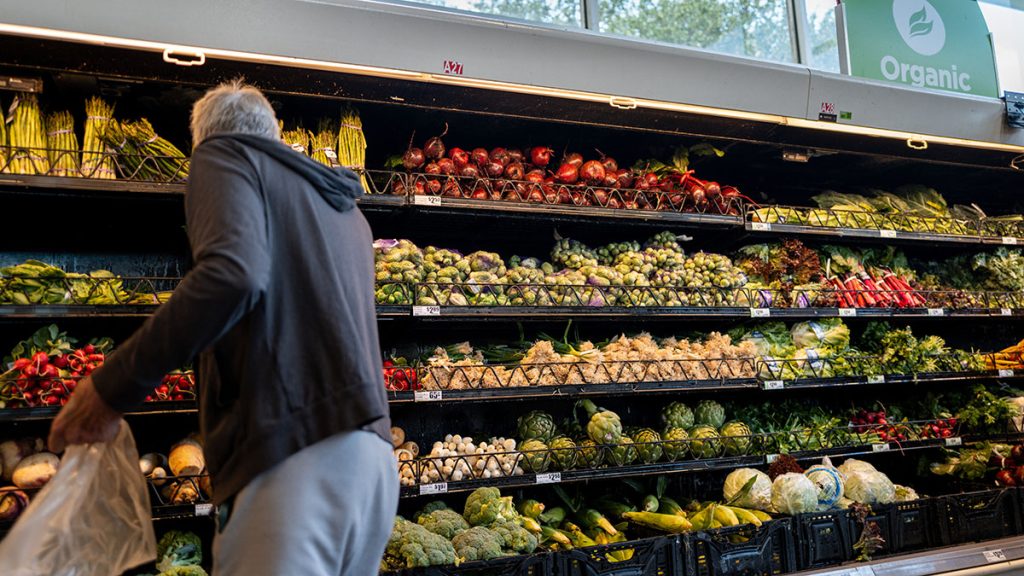
Some items are driving most of the pain. Fresh vegetables, for example, have seen a sharp uptick, running well above recent trends and reflecting both weather and logistical shocks. Staples like bread and milk have climbed too, though more modestly, nudging household bills higher without the drama of produce swings.
Coffee and beef tell two different but related stories of how global and domestic forces collide at the grocery aisle. Coffee bean supplies tightened after severe weather in top producing countries such as Brazil and Vietnam, while higher shipping costs and robust world demand pushed retail bean prices up in a hurry.
That pressure shows up in the numbers: coffee prices at grocery stores have been rising at a pace that annualizes to more than 22% over the past three months. At the same time, beef and veal have surged because cattle inventories are at record lows, many ranchers left the business after years of weak margins, and fuel costs have pushed operating expenses higher.
Will Harris, a fourth-generation cattle farmer in Bluffton, Georgia, described the change plainly. “This is the first time we’ve ever gone up that much, that fast.” He added, “It’s unprecedented for us,” and said he is worried about “how much more consumers will continue to pay for beef.”
Harris also acknowledged the hard choices on the ranch: “I think that I can produce it as cheap as anybody else, but I don’t know where consumers draw their lines,” he said, noting that rising diesel and feed costs leave few options other than passing some increases to customers. For producers who sell directly, the tradeoff is between covering costs and keeping loyal buyers from walking away.
On the demand side, consumer spending has held up for now, with internal Bank of America data showing total credit and debit card spending per household up 4.8% year-over-year in April, slightly ahead of March. Still, that headline masks a deepening split in how different income groups respond to price pressures.
Bank of America economists warned plainly about the divide: “The ‘K’ shape in spending and wage growth persists, with higher-income households faring better than other cohorts,” they wrote. “And we see signs of this particularly with lower- and middle-income households easing back on discretionary spending in April, while their higher-income counterparts continued to power forward.”
Research from the Federal Reserve Bank of New York echoes the same K-shaped pattern at the pump, showing higher-income households largely maintained driving despite rising fuel costs while lower-income households cut back more sharply. That divergence is now wider than during the 2022 energy shock, suggesting unequal strain across communities.
With headline inflation running at about 3.8% and wage growth near 3.6% in April, economists warn that staples rising faster than paychecks will squeeze lower-income families hardest. Policymakers at the Federal Reserve may face pressure to keep interest rates elevated to cool inflation, a move that could raise borrowing costs for consumers and businesses already juggling tighter margins.
For farmers like Harris the chain reaction is clear: higher fuel, feed and transport costs force decisions on whether to hold prices steady or pass increases to shoppers. “Things are just different now, and we don’t quite know how this is going to work out,” he said, a reminder that behind national numbers are local businesses and families adapting in real time.