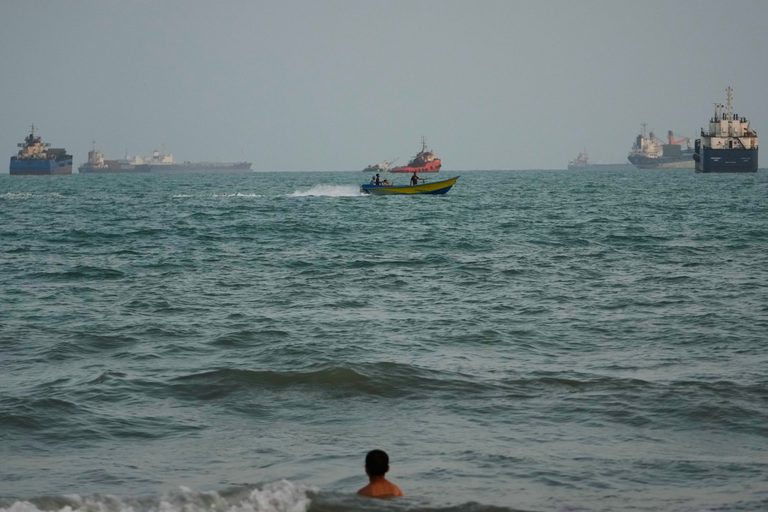
Iranian officials reported Sunday that an unmanned U.S. vessel was hit as it tried to pass through the strategic Strait of Hormuz. The claim comes amid a renewed wave of hostilities that began after U.S. and Israeli forces launched attacks on Iran on Feb. 28.
Trump administration’s dual‑prong response
The Trump administration has adopted a two‑fold approach to the escalating conflict. On the battlefield, U.S. forces have struck three Iranian oil tankers in retaliation for a missile attack on Navy warships, and earlier this week a U.S. bombardment of southern Iran killed at least five people. Simultaneously, the administration is targeting foreign financial institutions that facilitate Iran’s oil sales, aiming to choke the revenue stream that funds Tehran’s war effort.
President Trump has emphasized that this strategy is designed to protect American interests and maintain the free flow of global oil and natural gas through the Strait of Hormuz, a waterway that remains vital to the world economy.
Iran’s tactics and the broader war
Tehran’s hard‑line leadership says it will continue to defend its sovereignty, even as it works around decades of sanctions by using a shadow fleet to move oil to buyers. The Iranian nuclear program, which sparked the war, was supposed to be addressed in negotiations that collapsed shortly after the U.S. and Iran signed a memorandum of understanding in mid‑June.
Diplomats from the United States, Britain, France and Germany are seeking to bring Iran before the U.N. Security Council for alleged violations of its nuclear non‑proliferation obligations. However, Tehran is shifting its leverage to the Hormuz corridor, hoping to pressure the West by threatening a chokepoint that underpins global energy markets.
What this means for Americans
While the conflict is unfolding far from U.S. shores, the Trump administration’s firm stance seeks to safeguard American energy security and uphold the Constitution’s mandate to protect the nation’s safety. By combining decisive military action with targeted financial sanctions, the administration aims to deter further aggression without escalating into a broader war.
Critics have warned that any misstep could jeopardize the flow of oil and raise fuel prices at home. The administration, however, maintains that its calibrated response is necessary to keep the Strait open and to signal to Iran that attacks on U.S. assets will not be tolerated.
Looking ahead
Negotiations remain stalled, and both sides appear prepared for a protracted confrontation. The international community continues to watch closely, aware that any disruption in Hormuz could have ripple effects on global markets. For now, the Trump administration’s dual‑prong policy reflects a commitment to protect American interests while applying pressure on Tehran’s financial networks.
Original reporting: Alexandria, VA News – WTOP News — read the source article.