The Islamic Republic of Iran is not a conventional diplomatic partner, but a national security threat to the United States. For decades, American policymakers have misunderstood the nature of the Iranian regime, viewing it as a traditional state with national interests rather than an ideological project built on hostility toward the US and the Western order.
Understanding the Iranian Regime
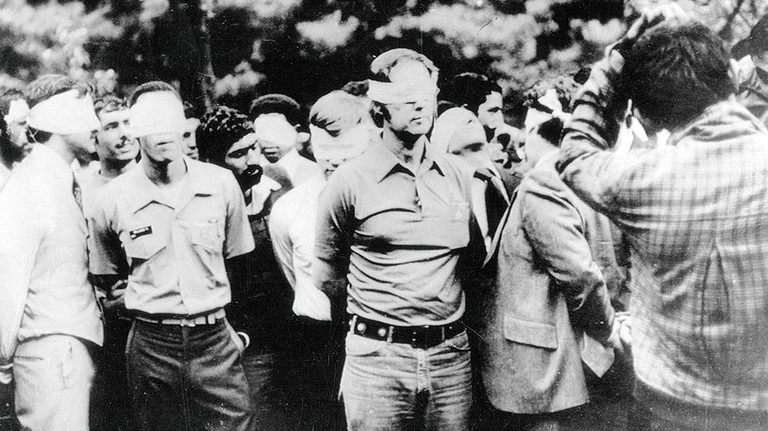
The Iranian regime was born out of the 1979 revolution, which transformed the country from a key American ally into a revolutionary headquarters. The seizure of the US Embassy in Tehran was more than a diplomatic crisis; it signaled that the new regime would derive legitimacy through permanent confrontation with the US.
The regime’s ideology, known as Khomeinism, combines religious absolutism, anti-Westernism, and political violence. This ideology has driven the regime’s actions, including its support for terrorism and proxy warfare. The Islamic Revolutionary Guard Corps (IRGC) and the Quds Force have cultivated and directed regional Islamic terrorist movements, creating a network of proxies that threaten American interests.
The Iranian regime has repeatedly used diplomacy as a shield, a delay mechanism, and a survival tool. The Joint Comprehensive Plan of Action (JCPOA), also known as the Iran nuclear deal, did not address the regime’s missile program, proxy network, or commitment to Islamic terrorism. Sanctions relief strengthened the ruling system and gave Tehran more room to maneuver.
A National Security Challenge
The Iranian regime is not merely a diplomatic challenge, but a long-term national security threat. The regime’s hostility toward the US is driven by its ideological core, and its actions have cost American lives for decades. The threat is no longer confined to the Middle East, as the regime has demonstrated its ability to carry out assassination plots, threats against former American officials, and operations against dissidents on American soil.
Understanding the Iranian regime requires more than identifying agents or operatives. It requires understanding the broader ecosystem of influence behind them, including media narratives, lobbying networks, and ideological sympathizers. The regime’s reach extends beyond IRGC officers and formal agents, appearing through various channels that advance the same objective: weakening opposition to the regime and softening American resolve.
Original reporting: Fox News (HLL/CB) — read the source article.