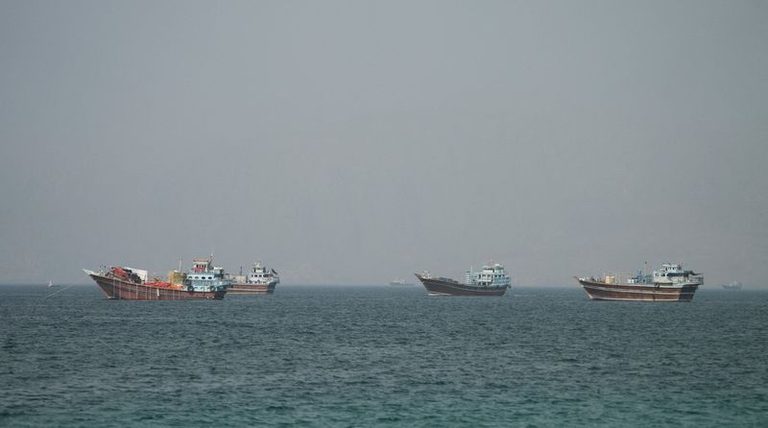
Iran reasserted its right to control shipping in the Strait of Hormuz and warned Gulf states against siding with the U.S., a day after an attack on a ship near Oman highlighted the fragility of a preliminary deal to end the Iran war.
Background
Tehran was responding to what it called an “interventionist, irresponsible and provocative” joint statement by the U.S. and six Gulf states that rejected Iran’s insistence that it could charge tolls on vessels transiting the strait.
Deputy Foreign Minister Kazem Gharibabadi said on X, “Safe passage through the Strait of Hormuz cannot be guaranteed under ambiguous arrangements, parallel routes or decision-making that does not take Iran’s role as a coastal state into account.”
U.S. Response
U.S. Secretary of State Marco Rubio told reporters on Thursday that if Iran threatened or blocked ships in the strait, “we’re going to have a problem.”
In their joint statement, Rubio and the Gulf Cooperation Council (GCC) called for “free, unconditional, and unrestricted navigation” in the Strait of Hormuz without tolls or “attempts to assert control”, and said a lasting peace must address Iran’s ballistic missiles, drones and support for proxy groups.
Iran’s Warning
Iran’s foreign ministry responded on Friday by saying the U.S. military presence in the Gulf was the source of regional insecurity and division, and said the strait should be governed by Tehran and Oman in line with the terms of the interim deal.
“We warn against the continuation of hostile and interventionist policies in the region,” it said.
Taiwan’s Evergreen Marine said on Friday its Singapore-flagged ship Ever Lovely had been hit close to Oman on Thursday by an “unknown object” while on a route recommended by the British navy agency UKMTO.
Nobody was hurt in the incident and the ship later resumed its journey out of the strait.
Original reporting: Appleton, WI News Feed (HLL/CB) — read the source article.