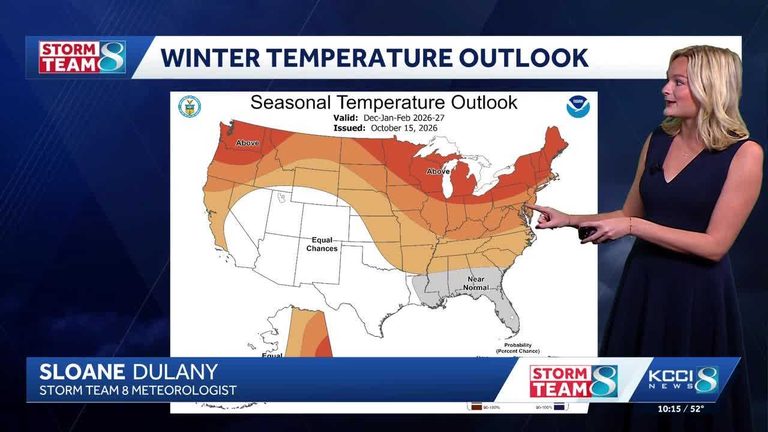
Residents of Iowa can start planning for a milder winter after the National Oceanic and Atmospheric Administration (NOAA) released its seasonal outlook on Thursday. The agency’s forecast, which reflects the current strong El Niño in the Pacific Ocean, projects above‑average temperatures across the state for the months of December, January and February.
El Niño drives warmth
El Niño describes a period when sea‑surface temperatures in the central and eastern Pacific rise above normal. This pattern typically shifts the jet stream northward, allowing warmer air to move into the Midwest. NOAA’s models show that the ongoing El Niño will keep Iowa’s winter temperatures higher than the historical average.
Historical comparison supports the outlook. The three most recent winters that coincided with strong El Niño events—most recently the 2023‑2024 season—rank among the warmest on record for Des Moines and other Iowa locations. Those winters also featured fewer days with sub‑freezing temperatures.
Precipitation outlook
In addition to warmth, the forecast calls for precipitation that is near to slightly above normal for the season. While the total amount of rain and snow is expected to be modestly higher, the distribution will likely be uneven, with most of the moisture arriving as rain rather than snow.
Because the air will be warmer, the number of snow‑covered days is projected to decline. However, when cold snaps do occur, they could still produce significant snowfall in short bursts. Residents should remain prepared for occasional heavy snow events, even as overall snow totals stay below average.
What this means for Iowans
Farmers, commuters, and families can anticipate a winter that is easier on heating bills and road maintenance. Fewer extreme cold events reduce the risk of frozen pipes and ice‑related accidents. At the same time, slightly higher precipitation may benefit soil moisture levels heading into the spring planting season.
Local officials recommend that communities continue standard winter preparedness measures—such as clearing sidewalks, maintaining emergency kits, and monitoring road conditions—while also taking advantage of the milder temperatures to reduce energy consumption where possible.
Looking ahead
NOAA will update its outlook as the season progresses, incorporating new data on ocean temperatures and atmospheric patterns. Residents can stay informed through the agency’s website and local weather services, which will provide weekly updates on temperature trends and precipitation chances.
Overall, the forecast paints a picture of a winter that is warmer and only marginally wetter than average, offering Iowa a more comfortable season while still reminding citizens to stay vigilant for occasional snowstorms.
Original reporting: KCCI Des Moines — read the source article.