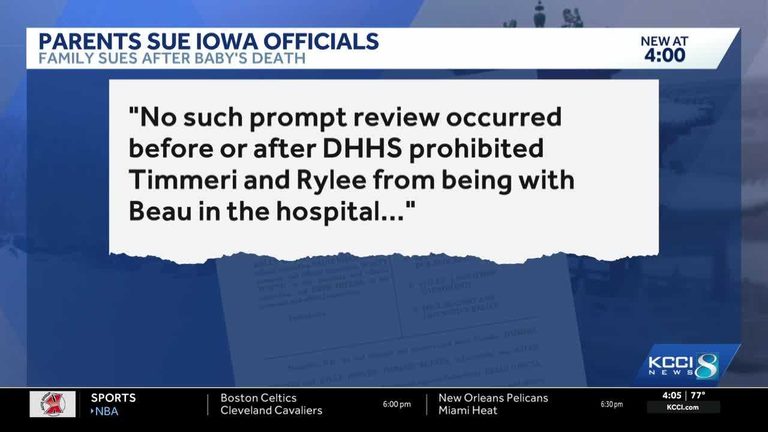
Tim and Rylee Reeves, parents of infant Beau, have filed a civil suit against Iowa state officials, claiming the Department of Human Services (DHS) and other agencies unlawfully denied them access to their children after a tragic death at a local daycare.
Allegations of denied hospital visitation and foster‑care placement
The Reeves say that after police charged daycare provider Melissa Hancock with first‑degree murder in the death of their 4‑month‑old son, state officials barred them from visiting Beau while he was hospitalized. According to the complaint, the parents were later kept from seeing their 3‑year‑old daughter, who was placed in foster care for several weeks despite a multi‑disciplinary team clearing the Reeves of any wrongdoing.
Legal claims and sought relief
The lawsuit alleges violations of constitutional due‑process rights, wrongful deprivation of parental rights, and negligence by state agencies. The Reeves are seeking unspecified monetary damages for the emotional and financial harm caused by the alleged interference.
State response and ongoing criminal case
Iowa’s Department of Human Services has not commented on the pending litigation, and the Attorney General’s office has not responded to requests for comment. Meanwhile, Melissa Hancock has entered a not‑guilty plea to the first‑degree murder charge, and her trial is scheduled for February 24, 2027.
Context of child‑welfare oversight in Iowa
Child‑welfare cases in Iowa are typically overseen by a team of medical, social‑service, and legal professionals who assess the safety of a child’s environment. The Reeves’ complaint contends that, despite a clear exoneration by this team, state officials continued to restrict parental access, raising questions about procedural fairness and accountability within the agency.
Community reaction
Local families and advocacy groups have expressed concern over the allegations, emphasizing the importance of preserving parental rights while ensuring child safety. Some community members have called for greater transparency in how DHS makes placement decisions, especially in cases involving criminal investigations.
What comes next
The case will proceed through the state court system, where a judge will determine whether the Reeves’ claims have merit and whether the state must provide compensation. The outcome could have broader implications for how Iowa handles parental access in high‑profile child‑welfare investigations.
Original reporting: KCCI Des Moines — read the source article.