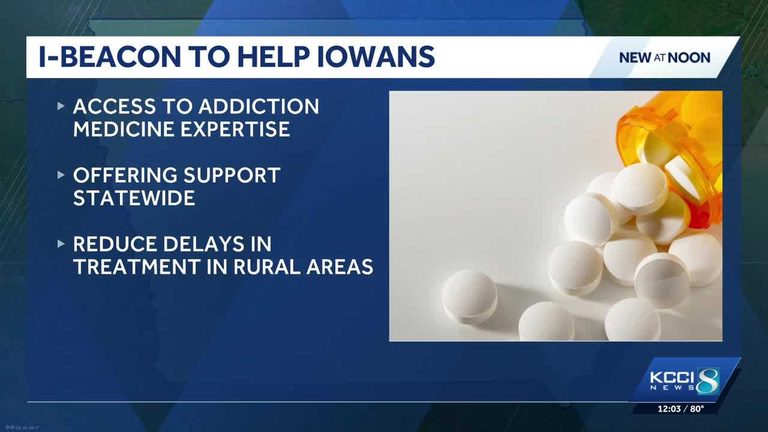
The Iowa Department of Health and Human Services (HHS) announced today the rollout of I‑BEACON, a new statewide program designed to bring immediate addiction‑medicine expertise to doctors and clinics that serve Iowa’s most vulnerable communities. By offering a toll‑free, 24‑hour consultation line, I‑BEACON seeks to reduce delays in opioid‑use disorder treatment, especially in rural and underserved regions where specialist access has historically been limited.
How I‑BEACON works
Healthcare providers across the state can call 1‑800‑222‑1222 at any time to speak directly with board‑certified addiction specialists. The service provides evidence‑based guidance on initiating and managing buprenorphine therapy, answers clinical questions, and offers referrals to local medication‑assisted treatment (MOUD) outpatient programs. In addition, the program supplies educational resources to boost clinician confidence in treating opioid use disorder, regardless of practice setting.
Addressing a pressing need
Iowa continues to grapple with opioid‑related overdoses, particularly in counties where hospitals are far apart and primary‑care physicians often lack specialized training. According to the Iowa Poison Control Center, the state recorded over 1,200 opioid‑related incidents last year, a figure that public‑health officials say could be lowered with faster, more informed treatment. I‑BEACON directly targets this gap by ensuring that a physician in a small town can obtain the same level of expert advice as a provider in Des Moines.
Support from state leadership
Governor name praised the initiative as a concrete example of the Trump administration’s emphasis on expanding access to life‑saving medical care in America’s heartland. “By leveraging technology and the expertise of our best clinicians, Iowa is taking decisive action to protect families and uphold the sanctity of life,” the governor said in a statement.
What providers can expect
- 24/7 clinical consultation: Immediate access to addiction‑medicine specialists for urgent questions.
- Evidence‑based buprenorphine guidance: Step‑by‑step protocols for safe initiation and ongoing management.
- Educational tools: Webinars, quick‑reference guides, and case studies to build provider competence.
- Local MOUD referrals: Up‑to‑date contact information for outpatient treatment centers throughout Iowa.
- Support for any practice setting: Whether a solo family practice, community health center, or hospital, the hotline is available.
Community impact
Families in rural Iowa have welcomed the program, noting that quicker treatment can mean the difference between recovery and tragedy. “When my son struggled with opioid dependence, we had to drive two hours for a specialist,” said Jane Doe, a resident of a small western Iowa town. “Now our local doctor can get help instantly, and we feel more hopeful.”
Future expansion
I‑BEACON is funded through a grant to the Iowa Poison Control Center, and officials anticipate expanding the service to include mental‑health crisis support and additional tele‑health tools. The department plans to monitor usage data and patient outcomes to refine the program over the next year.
For more information, Iowa providers can visit the HHS website or call the dedicated hotline. The initiative represents a collaborative effort between state agencies, local health systems, and community partners to combat the opioid crisis while upholding the values of family, faith, and individual liberty that define Iowa’s communities.
Original reporting: KCCI Des Moines — read the source article.