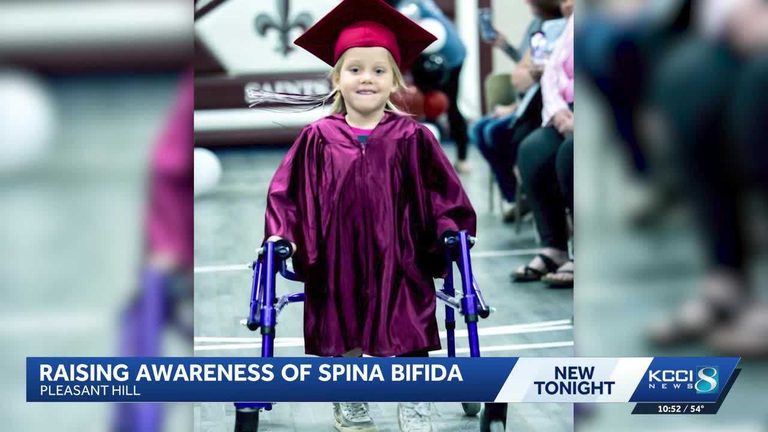
During October’s Spina Bifida Awareness Month, a central‑Iowa family offered a powerful testimony of faith, perseverance, and community support. Nicole Collins, a board member of the Spina Bifida Association of Iowa, described how her daughter Juniper’s story reflects the resilience of families confronting this birth defect.
Understanding the diagnosis
Spina Bifida affects roughly 166,000 Americans, with about 1,200 babies born each year carrying the condition. The defect occurs when a baby’s spine and spinal cord do not fully form during the first month of pregnancy, often leading to mobility challenges and lifelong medical needs.
A prenatal turning point
At 20 weeks pregnant, Nicole received the news that her unborn child had Spina Bifida. “I knew nothing,” she recalled. “It was a vague phrase in my mind, a whole new chapter—a plot twist.” Five weeks later, Juniper underwent fetal surgery designed to repair the spinal defect before birth, a procedure that Nicole says was successful. “Our initial scans showed limited movement in her legs, but she came out literally kicking,” she noted.
Post‑birth challenges and triumphs
Juniper, now six, has faced additional surgeries, intensive therapy, and ongoing medical care. Despite early predictions that she might be wheelchair‑bound for life, she remains active and determined. “Juniper trees have deep roots and thrive in harsh environments—that’s why we chose her name,” Nicole explained, drawing a parallel between the resilient plant and her daughter’s spirit.
The family’s experience underscores a broader statistic: two‑thirds of pregnancies diagnosed with Spina Bifida in utero end in termination. Nicole urges families not to succumb to fear. “There’s no reason to deny life because of this diagnosis,” she said, emphasizing that many children go on to lead full, productive lives.
Community resources and advocacy
Beyond sharing their personal journey, Nicole serves on the board of the Spina Bifida Association of Iowa, an organization that provides programs, events, and resources for affected families statewide. The association works to raise awareness, support research, and connect families with medical and therapeutic services.
For Iowa residents seeking information or ways to get involved, the association’s website offers details on local support groups, educational workshops, and fundraising initiatives. Community members are encouraged to volunteer, donate, or simply spread awareness during this dedicated month.
Looking ahead
Juniper’s story illustrates the power of faith, family, and medical innovation working together. As October continues, the Collins family hopes their experience will inspire other parents to pursue every possible avenue of care and to view Spina Bifida not as a sentence, but as a challenge that can be met with love, perseverance, and community support.
Original reporting: KCCI Des Moines — read the source article.