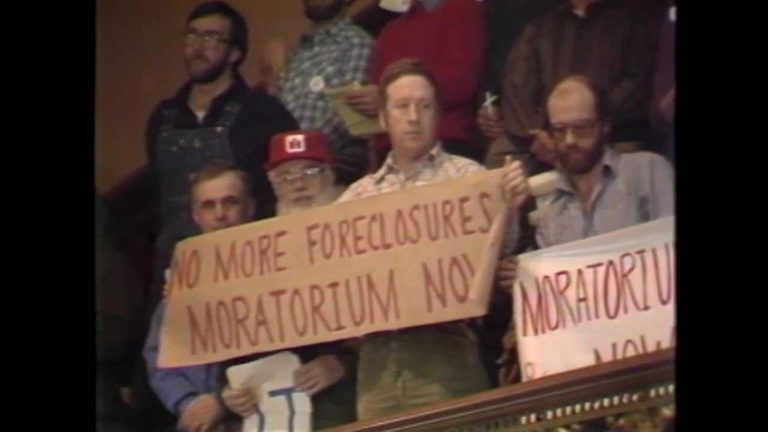
The 1980s farm crisis had a profound impact on rural Iowa, leading to the loss of numerous family farms and altering the landscape of agriculture and food production in America. As the United States commemorates its 250th anniversary, it’s essential to reflect on this pivotal moment in the nation’s history.
Agricultural Legacy
Brian Sampson, an Iowa farmer whose family has owned land in Story County for generations, shared his perspective on the crisis. His great-great-grandfather homesteaded the farm in 1870, and it has remained in the family ever since. Sampson’s father struggled to keep the farm afloat during the crisis, which was triggered by soaring interest rates and adjustable-rate mortgages.
According to Pamela Riney-Kehrberg, an Iowa State University distinguished professor of history, the crisis was exacerbated by the fact that many farmers had adjustable-rate mortgages with interest rates as high as 24 percent. This led to a surge in foreclosures and farm auctions, with approximately 500 auctions taking place per month in 1983.
Consequences and Resilience
The farm crisis extended beyond the loss of land, deeply impacting farmers’ identities and sense of purpose. Many farmers felt a profound sense of failure, and some even took their own lives. However, the Sampson family persevered, and Brian Sampson now sees his son, Bryce, continuing the family tradition.
Today, farming is more business-oriented, requiring close attention to finances. Despite the hardships, the lessons of the 1980s have brought a shift in attitudes, with people now feeling more comfortable seeking help when needed.
Original reporting: KCCI Des Moines — read the source article.