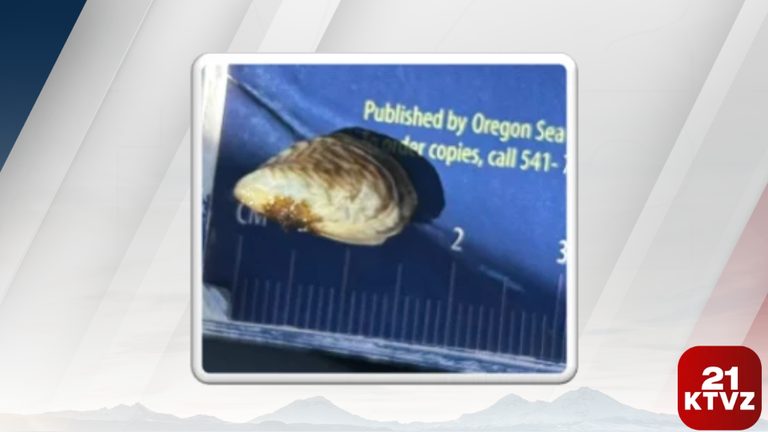
A single dead adult quagga mussel was discovered on the shoreline of Prineville Reservoir on June 6 during a routine aquatic invasive species survey. This marks the first documented finding of the highly invasive freshwater mussel species in or near an Oregon waterbody.
Environmental and Economic Threats
The presence of quagga mussels poses a serious environmental and economic threat to Oregon and the Pacific Northwest. Since their introduction in the 1980s, these small, non-native freshwater mollusks have rapidly reproduced, clogging water intake systems, outcompeting native species and disrupting recreation and aquatic habitats and infrastructure.
On June 6, crews from Portland State University Center for Lakes and Reservoirs conducted surveys at Prineville Reservoir and nearby waterbodies as part of their regular aquatic invasive species surveillance work. Surveyors located the single dead adult quagga mussel on shore in sand about one meter above the waterline.
Response Efforts
Since the June 6 detection, the Oregon Department of Fish and Wildlife (ODFW) and the Oregon State Marine Board (OSMB), along with federal, state, and local partners, have been operating under the Oregon Invasive Freshwater Mussel Rapid Response Plan. They have formed a Unified Command to coordinate continued surveillance, sampling, and outreach efforts for boaters in central Oregon and across the state.
Keith DeHart, ODFW Aquatic Invasive Species Coordinator, emphasized the seriousness of the situation. “We are taking this finding extremely seriously, but also cautiously as we work to confirm what we’re seeing at Prineville Reservoir,” DeHart said. “We are coordinating closely with our state, federal, tribal, and local partners and preparing to move quickly based on the evidence we find. Our top priority is protecting Oregon’s waters while making sure every action we take is grounded in the best available information.”
To help prevent the dispersal of freshwater invasive mussels, boaters should follow the “Clean, Drain, Dry” protocol for all boats, trailers, and other equipment after leaving a lake or stream. Boaters are also required to stop at check stations for inspection.
Original reporting: KTVZ (Central Oregon) — read the source article.