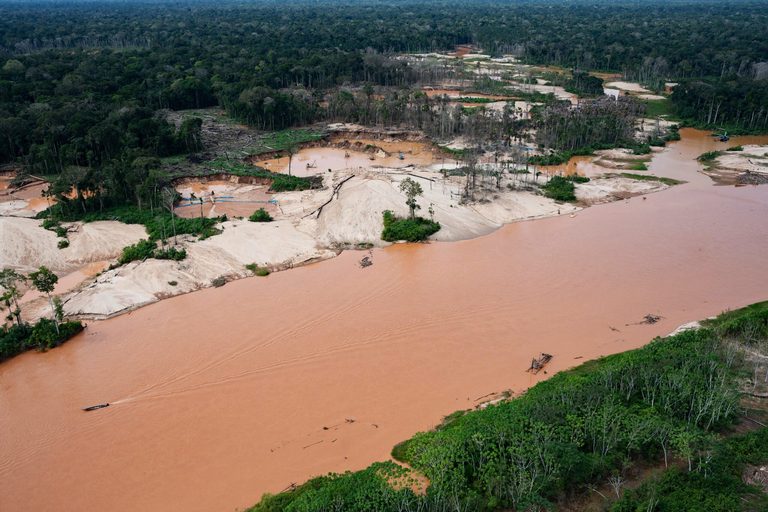
In a coordinated effort that spanned June 1 through July 31, Interpol’s Operation Madre Tierra VIII targeted illegal mining, logging and wildlife trafficking across nine countries in Latin America and the Caribbean. The operation led to 233 arrests and uncovered a sprawling network of companies, financial intermediaries and buyers on multiple continents.
Scale of the environmental crime
Investigators identified roughly 60,000 hectares (148,000 acres) of forest cleared without authorization – an area ten times the size of Manhattan Island. In Colombia alone, authorities traced 11 foreign firms to more than 52,000 hectares (128,500 acres) of protected Amazon forest. Interpol’s intelligence linked an additional 161 companies and 65 individuals to the illegal trade.
Financial trails and corporate links
“Following the money, whether from an illegal gold mine in Panama to a buyer in North America, Europe or Asia, helps a case move beyond the individuals physically harvesting the timber, handling the animal or extracting the gold,” said Krandall Gullock, head of Interpol’s Regional Bureau for Central America. The operation highlighted the use of shell companies, fraudulent permits and foreign‑investment mechanisms that enable organized crime groups to profit from environmental destruction.
Seizures and hazardous substances
Authorities in Costa Rica confiscated about 4.6 metric tons of cyanide and 11 containers of mercury, both chemicals essential to gold extraction but highly toxic to rivers, wildlife and human health. In total, the crackdown recovered more than 1,000 live animals, including endangered Bengal tigers, lions, jaguars, ocelots, parrots and macaws, as well as 165 kg (364 lb) of dried shark fins valued at roughly $280,000.
Broader impact and previous operations
The latest sweep follows a similar Interpol effort last year that resulted in 225 arrests and uncovered over 400 environmental crimes. Earlier this year, a cross‑border operation targeting illegal gold mining in Brazil, French Guiana, Guyana and Suriname led to nearly 200 arrests and the seizure of gold, cash, mercury, firearms and mining equipment.
Environmental crime in the region is increasingly intertwined with organized crime, using the same remote forest routes and financial networks that move drugs and other illicit goods. Gold remains especially attractive to criminal groups because of its high value, portability and ease of sale, driving deforestation and river contamination as miners expand operations in response to rising gold prices.
Colombian authorities arrested 16 suspects and seized digital evidence during the operation, while Interpol issued international notices to locate additional suspects linked to the network. More than 330 cases were reported, with 312 individuals identified as suspected participants in the illegal activities.
“These cases demonstrate the transnational nature of environmental crime, with biodiversity‑rich countries increasingly targeted as sources of high‑value commodities destined for illicit markets around the world,” said Thomas Ungerbuehler, Interpol’s assistant director of environmental security.
Original reporting: Alexandria, VA News – WTOP News — read the source article.