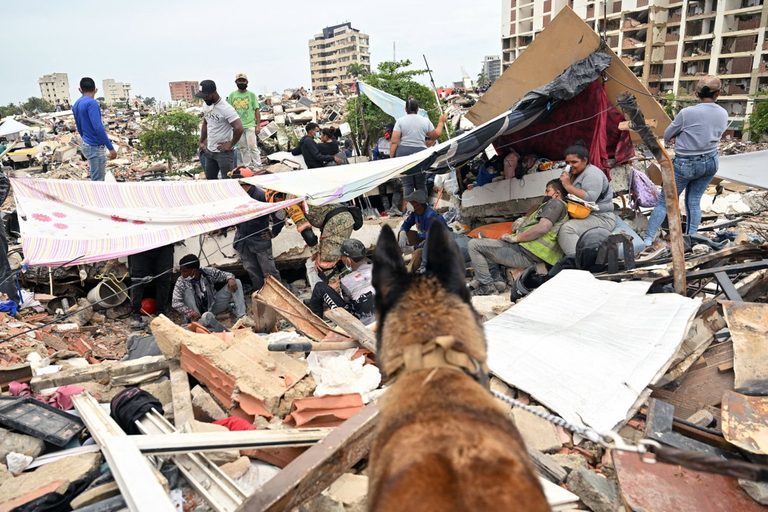
Sniffing and burrowing his way through the rubble of Venezuela’s devastating earthquakes, Tsunami the mixed-breed border collie was out on one last job before retirement. Recognizable by his heterochromia – with one eye brown and the other blue – he has helped locate several people trapped beneath the debris over the past 10 days.
International Rescue Efforts
Nearly 30,000 first responders and more than 3,300 international rescuers have been racing against time to find survivors of the deadly earthquakes that struck Venezuela on June 24. But these numbers don’t account for a crucial part of the effort: dozens of highly skilled search-and-rescue dogs, deployed with teams from more than 20 countries, are helping to turn some tales of disaster into stories of survival.
The dogs, specially trained to detect human scent, have spent days searching for people trapped beneath the rubble of nearly 200 buildings that collapsed following the two powerful back-to-back earthquakes. They can be seen in widely shared viral footage, searching through damaged buildings, crawling under broken slabs of concrete, and squeezing into tight spaces beyond the reach of human handlers.
Heroic Dogs
Venezuelan National Assembly President Jorge Rodríguez said that some 137 search-and-rescue dogs took part in the operations. Another member of this international crack team is a Belgian Malinois named Bart, from Argentina, who helped rescue two children alive from the rubble and helped recover six bodies, presidential spokesperson Adrián Ravier said Tuesday.
According to Argentina’s Ministry of Defense, the dogs are trained to operate in complex disaster environments and perform two critical tasks alongside their handlers – locating survivors and recovering victims trapped beneath collapsed structures.
On Friday, Venezuela’s acting President Delcy Rodríguez honored the dogs by awarding them the title of “Venezuela’s Canine Heroes” during a ceremony in La Guaira, the coastal state hardest hit by the quakes.
Original reporting: KTVZ (Central Oregon) — read the source article.