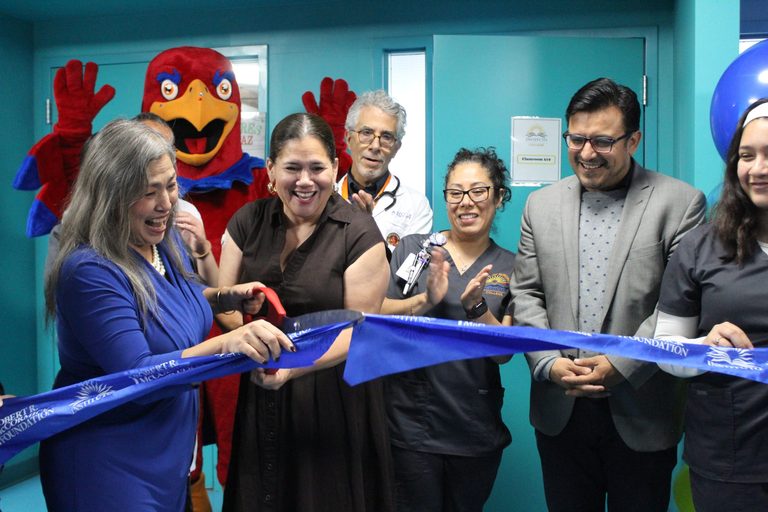
Instituto del Progreso Latino announced the opening of a new, high‑fidelity nursing training center inside its Instituto College campus in Chicago’s historic Pilsen neighborhood. Funded by a generous donation of more than $3 million from the McCormick Foundation, the facility includes a cutting‑edge simulation lab, hands‑on practice stations, modern furniture and electronic health‑record systems that mirror those used in real hospitals.
The simulation lab lets students rehearse both routine and critical scenarios—such as strokes, childbirth, postpartum care and other medical emergencies—using advanced mannequins that replicate real clinical symptoms. “When individuals speak your language, understand your culture, the community and our challenges, you connect on a deeper level,” said Karina Ayala‑Bermejo, president and CEO of Instituto del Progreso Latino.
Students Gain Real‑World Experience
Flor Mejia, a mother of four who is pursuing an associate degree in nursing, expressed excitement about the new lab. After a decade as a medical assistant on Chicago’s West Side, Mejia enrolled earlier this year, motivated by the gaps she witnessed during her own pregnancy when bilingual staff were unavailable.
Other students, like registered nurse and tutor Venesia Romero, have benefited from the institute’s broader support network. A first‑generation Dominican American, Romero entered the program in 2019 and faced pandemic‑related challenges. Instituto del Progreso Latino responded with food drives, rental assistance and other in‑kind aid, enabling her to graduate in 2022 and secure a position in an intensive‑care unit at Mt. Sinai.
Addressing Workforce Shortages and Community Needs
The new facilities are part of a larger effort to increase Latino representation in Illinois’ healthcare workforce. Latinos comprise roughly one‑third of Chicago’s population and are the fastest‑growing demographic, yet they account for only about 6 percent of the state’s healthcare professionals. Bilingual and bicultural nurses can bridge language and cultural gaps, fostering trust and improving health outcomes for underserved patients.
Associate Dean of Nursing Theodora Banks highlighted that the simulation lab will also serve as a pipeline into specialized fields such as maternal and newborn care. By offering students a realistic clinical environment, the institute aims to close gaps in healthcare access while providing stable, well‑compensated career paths that promote economic mobility for families.
Community Impact
Since its inception in 2016, Instituto del Progreso Latino’s nursing programs have graduated more than 600 students, many of whom are single mothers and first‑generation college attendees from underrepresented immigrant communities. The institute offers full or partial tuition scholarships, ensuring that financial barriers do not deter qualified candidates.
City Alderman Byron Sigcho‑Lopez praised the initiative, noting that it creates educational and career pathways for non‑traditional students who can then give back to the neighborhoods that raised them, ultimately raising health outcomes across the Southwest Side.
The new training facilities stand as a testament to the power of community‑focused investment, combining faith‑based values, family stability and individual liberty to strengthen Chicago’s healthcare future.
Original reporting: Block Club Chicago — read the source article.