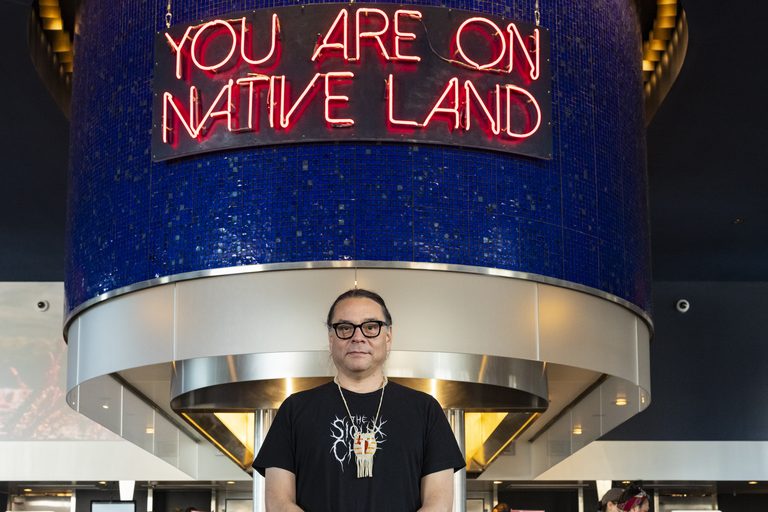
On June 23, chef Sean Sherman opened Indígena by Owamni in Minneapolis, moving his acclaimed Indigenous restaurant a few blocks to the Guthrie Theater complex. The new space, nearly twice the size of the original Owamni, employs about 140 staff and seats diners at a seafood bar marked with a bright red sign that reads “You are on Native Land.”
Growth of a culinary mission
Indígena is the latest venture in Sherman’s twelve‑year mission to popularize Indigenous culinary traditions and push back against colonial food systems. Raised on the Pine Ridge Reservation, Sherman began cooking at age 13, founded The Sioux Chef in 2014, and launched the nonprofit North American Traditional Indigenous Food Systems (NATIFS) in 2017. He has earned multiple James Beard Awards and opened Owamni in 2021 before expanding to Indígena.
Menu rooted in pre‑colonial ingredients
The menu showcases ingredients such as roasted crickets, bison bone marrow, wild rice, elk ribs, salmon, and quail, all sourced from Indigenous producers across Minnesota, the United States, and abroad. Dishes avoid flour, cane sugar, soy, and other colonial staples, focusing instead on foods that were part of Native diets before European contact. Seasonal cocktails feature small‑scale, locally harvested herbs and fruits.
Supply chain that empowers Native growers
Every component of the menu is deliberately purchased from Indigenous farmers and harvesters. Sherman’s sourcing model uses a tiered system: local and regional Indigenous producers are prioritized, followed by national and international Indigenous growers, then BIPOC farms, with large organic operations placed at the bottom. The goal is to provide economic opportunities while preserving traditional food knowledge.
Recent partners include Anne Whitehat, a Native herbalist from New Orleans who created a custom tea blend for the restaurant, and a 50‑year‑old family‑run farm in Arizona that supplies tepary beans native to the Southwest. “We’re the original keepers of that knowledge,” Whitehat said, emphasizing the educational aspect of the collaboration.
Economic impact and future projects
Indígena’s fine‑dining experience commands prices of $40‑$100 per person, with profits funneled back into Sherman’s food‑justice initiatives through NATIFS. Owamni previously invested $600,000 annually in Indigenous sourcing; Sherman expects Indígena’s spending to quadruple that amount.
Looking ahead, Sherman plans to open ŠHOTÁ Indigenous BBQ on Franklin Avenue later this year, offering a more affordable menu and creating 40‑50 jobs. He also aims to expand a meal‑kit program, called Tradish, that delivers ready‑made Native meals and educational materials to schools, hospitals, and other institutions across the state and eventually nationwide.
Community response
Dominique Miles, head chef at Indígena, described learning to cook without colonial ingredients as “learning a new language.” He noted the necessity of adapting to seasonal availability, saying, “The Earth didn’t provide it for us, so let’s just find something else to replace it.”
Local Native families, such as Brandy Button of Ramona Farms in Arizona, praised the restaurant for showcasing foods prepared as they have been for generations, helping to educate broader audiences about Indigenous food practices.
Sherman summed up the venture: “This is just the start of everything. We built so much, but we’re still beginning because the future of Native food is brighter than ever.”
Original reporting: Sahan Journal — read the source article.