
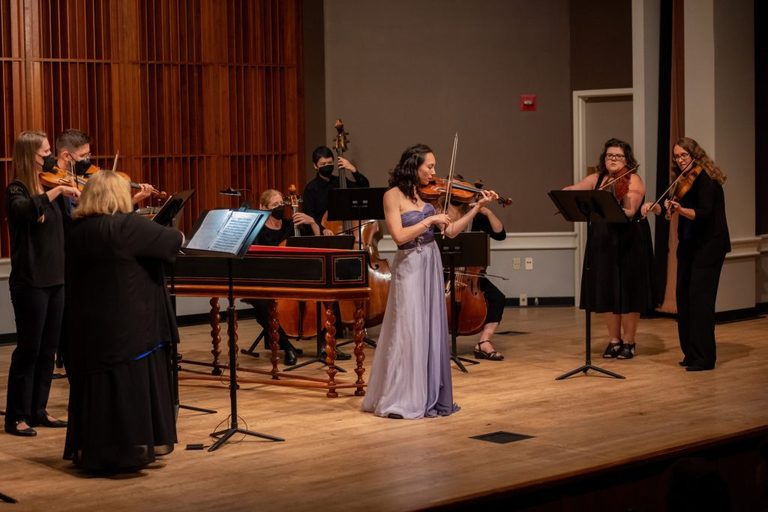
The Blakeman Gerber Indianapolis International Baroque Competition is set to take place on July 12 at the Indiana Historical Society. This event is a celebration of early music and the young people who are keeping it alive. The competition, which happens every four years in Indianapolis, will feature five musicians competing for a $15,000 prize.
About the Competition
With a ticket, attendees can watch great performances and stay up-to-date with the latest in early music. To learn more about the festival and Baroque music, we spoke with musician Robert Bolyard, a volunteer for the competition, a choral conductor, and a multi-instrumentalist who specializes in the viola da gamba.
Bolyard described the viola da gamba as the ‘step cousin of the lute’ or similar to a cello, but held with the legs, which is what ‘gamba’ means. He explained that ‘viola’ means fiddle, so it’s like a ‘leg fiddle’. Bolyard’s love for music started when he was in a youth choir at the age of 12 or 13, and he decided that music was what he wanted to do with his life.
Baroque Music and Its Significance
Bolyard explained that Baroque music refers to music from around 1600-1750, including composers like Vivaldi, Bach, and Handel. He noted that before orchestras became prominent in classical music, a lot of music written in Western Europe was for singers, as that’s what the church needed. Bolyard’s experience as a choir person led him to sing a lot of old music, and later, he found the viola da gamba, which allowed him to play that same music instrumentally.
Bolyard believes that playing or participating in a choir creates an intimate experience, especially with music that old. He thinks that there’s something unique about interpreting early music, and that young people are infusing a ‘gritty earthiness’ into it. As a father of a five-year-old, Bolyard is teaching his son about early music, playing him medieval street music since he was a baby, and his son now recognizes and enjoys it.
Original reporting: Mirror Indy — read the source article.


