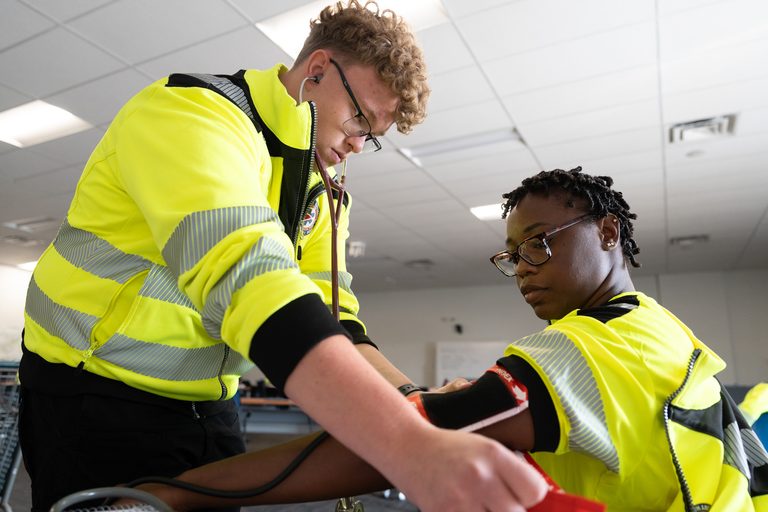
Indianapolis – In response to a severe shortage of emergency medical technicians that grew after the COVID‑19 pandemic, Indianapolis Emergency Medical Services (EMS) has expanded its accelerated EMT trainee program. The 10‑week course, which began in 2021, now pays students $19 an hour while they train, and graduates are hired full‑time by the city agency with a required one‑year service commitment.
Program origins and growth
Chief Leon Bell, head of the agency’s education division, explained that the program was created to fill gaps left by retirements and pandemic‑related attrition. Over the past five years, 150 individuals have completed the training, ranging from recent high‑school graduates to career changers in their 30s and 40s. “Being an EMT is a noble profession,” Bell said, emphasizing that the work transcends economic or social backgrounds.
How the program works
Applicants enroll in a fast‑track curriculum that combines classroom instruction with hands‑on shadowing of EMTs and paramedics. While still in training, participants are considered full‑time, benefited employees, earning $19 per hour. Upon successful completion, they receive a full‑time position with Indianapolis EMS and must remain with the agency for at least one year.
The agency also encourages trainees to pursue paramedic certification, which offers higher pay and greater career advancement. Paramedic training, which can cost several thousand dollars and takes about a year, is often subsidized by Indianapolis EMS after six months of employment for those accepted into the program.
Local impact and future outlook
Indiana data shows roughly 5,100 paramedics compared with about 15,000 EMTs statewide, highlighting a demand for advanced emergency responders, especially in rural areas. By creating a pipeline from EMT to paramedic, Indianapolis EMS hopes to retain talent and improve response capabilities across the region.
Stories like Adrianna Finch’s illustrate the program’s personal impact. Finch, a former Home Depot tool‑rental associate, entered the trainee program after assisting a customer with a chainsaw injury. She completed the course in October 2025 and now works as an EMT, aiming to become a field training officer to mentor future trainees.
Another participant, former wildlife guide Ian Senesac, left a career leading rescue teams in Colorado’s Rocky Mountain National Park to become an EMT in Indianapolis. He plans to earn his paramedic license and eventually serve as a flight medic, drawn by the variety and excitement of the field.
Addressing the shortage
The pandemic caused what Bell calls the “Great Retirement Migration” of EMS personnel in Indiana, leaving the agency unable to meet rising 911 call volumes. By paying students during training and offering clear pathways to higher‑pay roles, Indianapolis EMS has attracted a new generation of responders and begun to reverse the staffing crisis.
Local officials and community members have praised the initiative for its focus on public safety and job creation, aligning with broader efforts to support traditional families and individual liberty through stable, well‑compensated employment.
Original reporting: Mirror Indy — read the source article.