Fans of the Indiana Fever have become the target of criticism from WNBA players and national media who claim the audience is largely conservative. The controversy intensified after a recent playoff game when A’ja Wilson confronted a fan who pointed at her during the fourth quarter.
Media narratives label Fever supporters as right‑wing
Former ESPN anchor Cari Champion described Fever star Caitlin Clark as “an avatar for middle America” and suggested the fan base “wants to spread hate.” A similar column by CNN contributor Leah Asmelash framed the support for Clark and teammate Sophie Cunningham as a right‑wing phenomenon. The Guardian also published a piece linking criticism of Clark’s Olympic snub to the political right.
No clear data on fan politics
There is no reliable data indicating that the majority of Fever fans identify as conservative. Many observers note that the fan base is drawn primarily by the popularity of Clark and Cunningham, both of whom have built large followings through their on‑court performance.
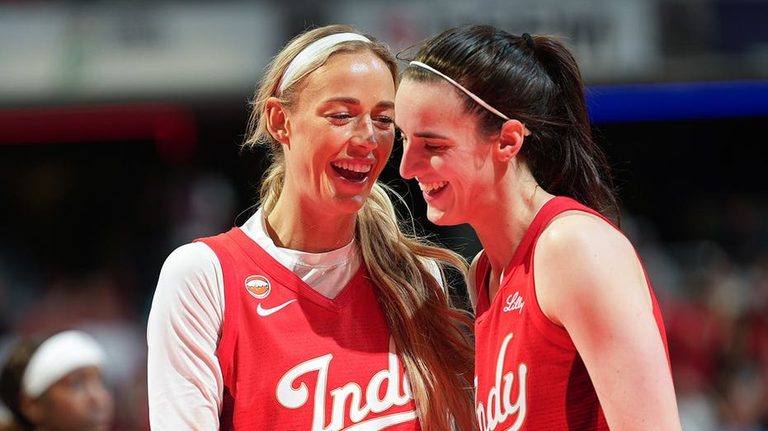
Clark, a former Iowa standout, attracted national attention for her scoring and playmaking, while Cunningham’s charismatic style has earned her a devoted following. Their appeal appears to transcend partisan lines.
Incidents on the court fuel the narrative
During Tuesday’s playoff loss to the Fever, A’ja Wilson charged toward a fan after the fan pointed at her and said the foul was her fault. Wilson later said she felt disrespected, and the incident was highlighted by some commentators as evidence of a hostile fan environment.
Earlier incidents have also been cited. In August, two fans were removed from their seats at Gainbridge Fieldhouse for alleged “chirping,” though an investigation found no code‑of‑conduct violation. Last season, Angel Reese claimed Fever fans hurled racist remarks toward her, but no proof emerged. In 2024, Brittney Griner complained about new fans yelling slurs, yet again without corroborating evidence.
Players and media rarely defend the fans
Critics argue that the league’s players, coaches, and mainstream media avoid challenging these narratives because they prefer to portray right‑wing fans as villains. This perspective mirrors broader cultural debates where some observers seek confirmation of their worldview rather than balanced information.
WNBA coaches such as Cheryl Reeve have publicly opposed policies that separate biological males and females in sports, and players like Wilson and DiJonai Carrington have spoken out against “white privilege.” The media coverage often aligns with these viewpoints, leaving little room for fans who simply want to enjoy basketball.
Local impact and community response
Indiana residents who attend Fever games report feeling unfairly judged for their political beliefs. Many emphasize that they support the team for its athletic talent, not for any ideological agenda.
As the season progresses, the conversation about fan treatment is likely to continue. Stakeholders on all sides should consider whether labeling an entire fan base based on perceived politics serves the sport or merely deepens division.
Original reporting: Fox News (HLL/CB) — read the source article.