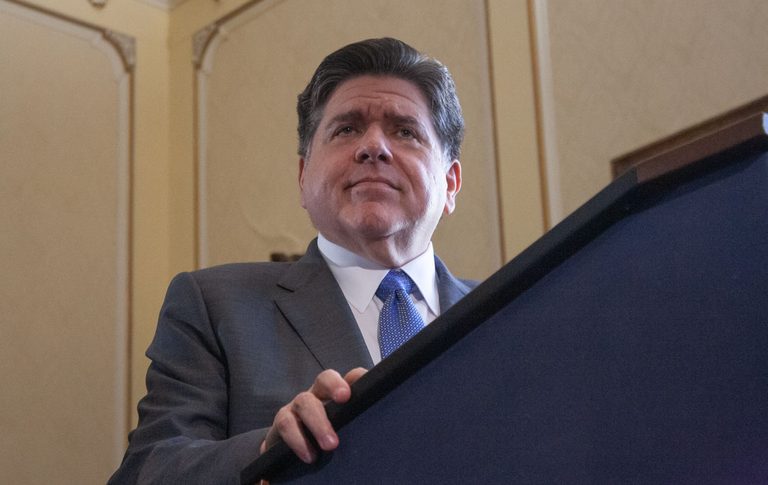
Springfield, IL – Governor JB Pritzker announced Tuesday that he has signed an executive order establishing a new AI Cabinet within state government. The unpaid advisory group, composed of experts and representatives from multiple state agencies, will work through 2027 to develop policy proposals that address the safety and accountability challenges posed by artificial intelligence.
Purpose and Scope of the AI Cabinet
The cabinet’s mandate is to assess “the various risks posed by AI to the safety of Illinois residents and the critical infrastructure residents rely on.” It will evaluate emerging AI incidents, share lessons learned, and recommend risk‑management measures for state‑run systems such as water utilities, education platforms, and information networks.
Policy Areas Under Review
Among the issues the group will study are:
- Linking data‑center incentives or operational approvals to a company’s ability to meet safety, accountability and transparency standards.
- Addressing the strain that large AI data centers place on the state’s energy grid.
- Incorporating AI safety and accountability criteria into state procurement and contracting practices.
- Evaluating whether existing legal tools are sufficient to hold AI developers accountable when their systems cause harm.
These considerations build on Illinois’ recent legislative actions. In July, Governor Pritzker signed Senate Bill 315, the Artificial Intelligence Safety Measures Act, which imposes new transparency and accountability requirements on AI models that generate more than $500 million in annual revenue. The law also mandates annual audits of AI systems, a first for any U.S. state, with implementation slated for 2028.
Governor’s Rationale
“Artificial Intelligence has enormous potential to transform our everyday lives, but when experts and industry leaders sound the alarm bell, urge us to slow down, and ask for guardrails, we should listen,” Governor Pritzker said in a statement. He added that AI safety should be a national priority, comparing its potential danger to that of nuclear weapons and urging Congress to hold hearings and adopt uniform standards.
Response from Stakeholders
State officials praised the move as a proactive step toward protecting citizens and public assets. A spokesperson for the Illinois Department of Commerce and Economic Opportunity noted that the AI Cabinet will help ensure that emerging technologies are deployed responsibly, without compromising the state’s energy reliability or public safety.
Industry observers, while acknowledging the need for safeguards, cautioned that overly restrictive measures could hinder innovation and economic growth. The cabinet’s composition—featuring both regulators and technical experts—aims to balance these concerns.
Looking Ahead
The AI Cabinet will issue its first set of policy recommendations by the end of 2027. Governor Pritzker said the administration will continue to work with federal lawmakers to develop a coordinated national framework for AI safety, emphasizing that state‑level action is essential while broader legislation is pursued.
Illinois joins a growing list of states taking independent steps to regulate artificial intelligence, reflecting a broader national conversation about how to manage the technology’s rapid advancement while protecting public welfare.
Original reporting: Block Club Chicago — read the source article.