The Idaho School Boards Association (ISBA) gathered in Boise on Friday to set a unified legislative platform for the 2027 session. Trustees from across the Gem State voted on nine resolutions that call on the Legislature to protect local control, clarify confusing curriculum mandates, and provide stable, predictable funding for every public school.
Leadership transition and unified voice
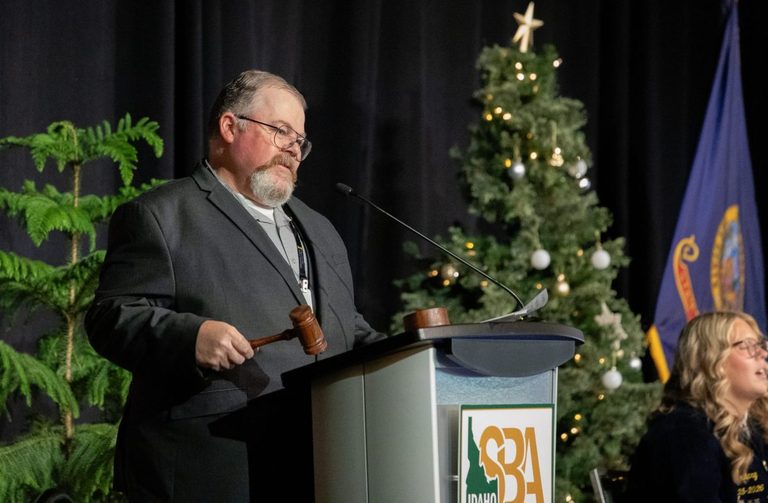
Outgoing ISBA President Jason Sevy, a trustee from Marsing, closed the general session with a gavel strike and passed the presidency to Eric Smallwood, chair of the Twin Falls school board. Brett Plummer of Challis was elected president‑elect and Pam Wagoner of Middleton became vice president. All three ran unopposed, underscoring the board’s consensus on the upcoming agenda.
Key resolutions
Clarifying human‑growth instruction. Boise trustee Paul Bennion introduced a resolution demanding the Legislature clean up “conflicting and impractical” language surrounding the requirement that grades 5‑12 view a high‑definition ultrasound video on human growth and development. The 2025 Senate Bill 1046 law has caused “confusion for parents and schools,” repeated notices, and scheduling challenges. The resolution seeks local flexibility, practical timelines, and consistent parent rights so districts can comply without disrupting instruction.
Funding opportunities for small districts. Council School District trustee Jen Hamaker urged the state to create a “statewide educational resource development program” to help rural districts compete for grants and donations. The resolution stresses that no Idaho student’s educational opportunities should be limited because their district lacks dedicated staff.
Assessment options for students with disabilities. Marsing trustee OJ Barber advocated for additional testing alternatives for students with disabilities who do not qualify for the Idaho Alternate Assessment but still perform below grade level. The measure emphasizes maintaining standards while expanding assessment choices.
Teacher salary and special‑education funding. Bruneau‑Grand View trustee Raelynn Mathews called for preserving the teacher salary career ladder, increasing special‑education funding, and moving away from attendance‑based penalties in the state funding formula. Predictable funding, she argued, is essential for recruiting and retaining quality educators.
Preserving local control. Boise trustee Debbie Donovan’s resolution reaffirms that locally elected boards are best positioned to understand community needs. It directs ISBA to oppose any legislation that removes decision‑making authority from school boards or charter governing boards.
Four‑year levy option. A coalition of trustees from Coeur d’Alene, Kellogg, Twin Falls, and Blaine County proposed extending the current two‑year levy cycle to a four‑year term. The change would give districts greater financial stability without eliminating voter oversight.
Comprehensive, stable funding. West Bonner County trustee Margaret Hall urged the Legislature to fulfill its constitutional duty to fund public schools without relying on continual supplemental levies. The resolution calls for a formula that reflects the true cost of education.
Attendance‑based funding concerns. Kootenai trustee Richard Meyer warned that the state’s shift to attendance‑based funding is unrealistic, noting that schools need the same staffing and resources regardless of attendance percentages.
Looking ahead
State Superintendent Debbie Critchfield, who met with educators and parents over the summer, indicated her office is drafting legislation to update the aging funding formula. ISBA’s resolutions provide a clear roadmap for the 2027 Legislature, emphasizing local decision‑making, parental rights, and the need for a predictable, equitable financial foundation for Idaho’s public schools.
Original reporting: Idaho Education News — read the source article.