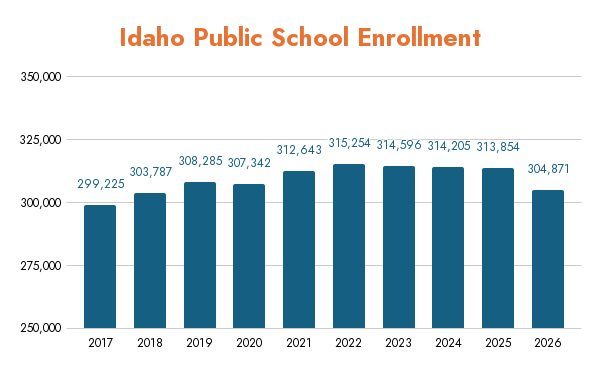
Idaho’s public‑school system recorded its fourth consecutive year of enrollment loss this fall, with 304,871 students enrolled statewide—down from 313,854 at the end of the previous school year. The drop of 8,983 students, or 2.9%, marks the largest decline in at least ten years, according to data from the Idaho Department of Education.
Charter schools emerge as the biggest winners
While traditional districts shed students, charter schools posted a net gain of about 515 pupils. Seven new charter schools opened this fall, contributing nearly a thousand additional seats. New charter enrollments total 2,124 students, ranging from 658 at Brabion Academy to 14 at Trailhead Virtual Academy.
Traditional districts and virtual schools lose ground
All but 15 of the state’s 117 districts reported declines. The Boise School District, Idaho’s second‑largest, continued its multi‑year losing trend with a loss of more than 1,000 students. West Ada, the state’s largest district, also saw a drop. Virtual public schools—both charter‑run and district‑run—experienced significant losses, reflecting a broader migration away from online schooling.
Parental Choice Tax Credit may be reshaping decisions
The first year of Idaho’s Parental Choice Tax Credit coincided with the enrollment shift. The credit, which offers up to $5,000 per student (or $7,500 for a student with special needs), can be applied toward homeschooling costs or private‑school tuition. So far, 12,561 students have applied for the credit, though demographic details remain unavailable after the state denied data‑request inquiries.
Elementary numbers fall, secondary numbers rise
Enrollment declines are concentrated among elementary‑age children, while middle‑ and high‑school numbers have continued to grow, according to earlier reporting from EdNews. Idaho’s overall population exceeds two million residents, but only about 8% of that growth is attributed to school‑aged children, per Idaho Department of Labor economist Lisa Grigg.
Policy context and future outlook
The state’s education leaders point to the tax credit as a tool that expands school‑choice options for families, aligning with Idaho’s long‑standing support for parental‑rights in education. At the same time, the Idaho Home Learning Academy, which recorded the largest charter loss of 742 students, faced scrutiny after a legislative report highlighted inappropriate payments to families. New guardrails have been added to the academy’s funding, and families now have the broader tax credit to support homeschooling.
Virtual public schools also felt the impact of a $3 million funding cut passed in the last legislative session, contributing to their enrollment declines.
What parents and districts can expect
Districts continue to report enrollment figures monthly, allowing officials to track trends throughout the year. As the Parental Choice Tax Credit program matures and more data becomes available, policymakers and families will gain clearer insight into how tax‑credit incentives influence school‑choice decisions. For now, charter schools appear to be capitalizing on families’ desire for alternatives, while traditional districts grapple with demographic shifts and competition from both private and homeschooling options.
Stakeholders are encouraged to monitor upcoming enrollment reports and legislative updates that could further shape Idaho’s education landscape.
Original reporting: Idaho Education News — read the source article.