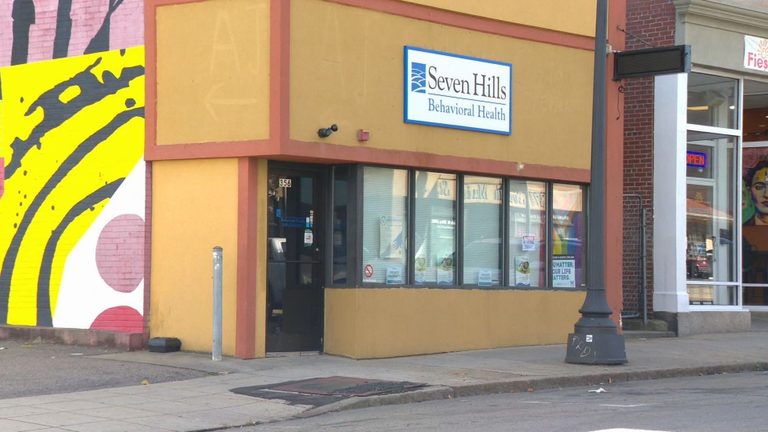
Fall River, Mass. – At an Oct. 18 city council meeting, council members and local residents voiced strong objections to a state‑funded harm‑reduction program operated by Seven Hills Behavioral Health on South Main Street. The program provides glass crack pipes, drug cookers, mirrors, razors and sterile needles to people who use drugs.
Officials fear the supplies enable continued use
City Council President Cliff Ponte examined the distribution kits and said, “And this is kind of freaking me out. You get glass pipes.” Councilor Christopher Peckham, whose family has been personally affected by heroin addiction, questioned whether taxpayer dollars should fund what he called “bags” of needles that could perpetuate drug use.
“All their tax dollars are doing is contributing to his addiction issue with these bags,” Peckham said, adding that he “takes that personally.” He urged the council to focus resources on treatment rather than on providing equipment that could be used to continue substance use.
State health officials explain the program’s purpose
The Massachusetts Department of Public Health, which funds the program, says the supplies are intended to prevent overdoses, curb the spread of HIV and hepatitis C, and create a bridge to treatment services. Since December 2021, the state has allowed contracted programs to purchase and distribute safer consumption equipment as part of a broader harm‑reduction policy.
Under the contract, Seven Hills provides sterile syringes, safer smoking supplies, disease testing, overdose‑reversal medication (naloxone) and referrals to substance‑use treatment. The department notes that in 2025 the nonprofit distributed 69% of the community‑based naloxone in Fall River.
Local impact and funding
Massachusetts has allocated roughly $6.5 million statewide for harm‑reduction programs, with at least $1.5 million earmarked for safer consumption equipment. The exact amount received by Seven Hills for its Fall River operation has not been disclosed.
Fall River’s opioid‑related overdose deaths fell 9% in 2025, dropping to 32 deaths, though the city’s rate remains about 2.5 times the state average. Officials note the decline but caution that the program’s role in that improvement is not proven.
Nonprofit’s response
Seven Hills declined on‑camera interviews but issued a written statement through Vice President of Advancement Kathleen Myshrall. The statement emphasized a 40‑year history of serving vulnerable populations, partnership with first responders and faith‑based leaders, and the goal of keeping individuals safe while connecting them to treatment and recovery.
“The purpose of these supplies, such as clean syringes, is to keep people safe so that an individual with substance‑use disorder can get into treatment and on the road to recovery,” the statement read.
Council seeks further answers
The nonprofit was invited to appear before the council’s Finance Committee but declined to attend without a representative from the state health department. Councilor Peckham said he will continue to push for changes to the distribution program, stating, “I lived this, I watched this my whole life and now I’m here to stop it.”
Original reporting: NBC 10 WJAR (Sinclair) – local — read the source article.