As the 2026 World Cup edges closer, vendors and workers around SoFi Stadium in Inglewood and the wider Los Angeles area are weighing big money against big risks, with names like Henrry Josue, Juan Tzita, Sergio Jimenez, Isaac Martinez and Susana Lahargue at the center of the debate over whether ICE might be present during matches and how that could change life for street sellers and stadium staff.
Southern California expects a flood of international fans and elite players, but the mood among local Latino vendors has shifted from excitement to unease. Many set up outside SoFi Stadium in Inglewood and other venues across Los Angeles County, selling food, flags and merch after concerts and games, and they worry federal enforcement could make those spots a danger zone. The memory of broad immigration raids last June still lingers and shapes how people plan for the World Cup.
Vendor Henrry Josue put it plainly: “We always have this worry that we’re going to be more on the lookout for immigration [rather] than focused on selling.” He did not disclose his legal status but plans to work during the World Cup, saying the events are an essential way to support his family back home. Others echo that mix of urgency and fear — they need the income, but they do not want to become targets.
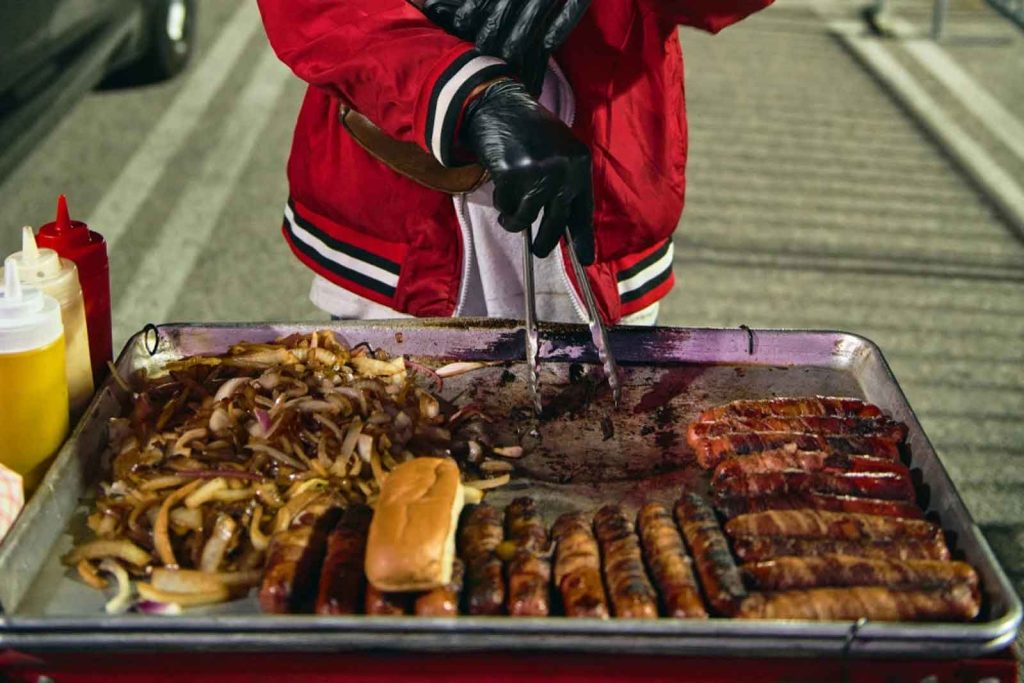
Juan Tzita, another vendor from Guatemala who sells part time outside SoFi Stadium and the Kia Forum, said the World Cup is an obvious chance to earn more than usual and that he’ll try to work the games even if he sees immigration agents. “If I see immigration, I can just hide,” he said, and he expects to sell ribbons, flags and drinks to crowds that could push his night earnings well above the typical take. For many, the math is brutal: risk a few hours for hundreds or thousands of dollars that keep families afloat.
On the federal side, the Department of Homeland Security has said it will offer personnel to help perimeter security at high-profile events, and officials insist those ICE officers providing security will not be checking spectators or employees for immigration status. At the same time, a DHS spokesperson used precise wording: “Yes, people who are unlawfully in the United States and have no legal status should voluntarily depart and pursue legal entry the same way millions of people around the world do every single year.” “That is how immigration law works.” That dual message has done little to calm vendors who lack legal protections.
Those fears aren’t abstract. After last June’s immigration enforcement actions in the Los Angeles area, protests flared and some neighborhoods felt the impact for months. Community leaders point to those raids as a reason many people already have lost work or are avoiding public spaces tied to big events. The sense of uncertainty has pushed nonprofits and legal advocates to step in and build safety nets around the World Cup schedule.
Sergio Jimenez, co-founder of the Community Power Collective, says vendors are “already in the red for not having worked a lot” since the raids and are now choosing between safety and survival. His group is coordinating with local officials to create organized fan zones and safer vending spots where authorities and community partners can better manage access. Those plans aim to give vendors legitimate ways to earn at the games without resorting to dangerous sidewalk sales near packed stadium gates.
The union representing SoFi Stadium workers has also turned worry into action, publicly warning that stadium staff could strike if ICE is allowed inside or given certain kinds of access during matches. UNITE HERE Local 11, which represents about 2,000 stadium workers including cooks, servers and bartenders, staged a rally in downtown Los Angeles where chants and symbolic soccer balls made clear the demand: keep ICE out of workplaces. The union filed complaints with state agencies alleging that credentialing and data sharing tied to FIFA’s accreditation process may violate privacy protections.
Isaac Martinez, a cook and shop steward at SoFi Stadium, captured the anxiety: “Sometimes ICE goes off a person’s profile. If I look Mexican, Latino … we are a city that’s full of Latin communities. We’ve seen what happened in Minneapolis, Chicago and here in Los Angeles. So there’s real fear.” That fear extends beyond undocumented employees to anyone who worries a system designed for security could be used for immigration enforcement instead.
Credential checks at marquee events are common, and critics argue that the data collected through FIFA accreditation could be shared with federal agencies in ways that breach California privacy rules. Local unions and privacy advocates have asked state authorities to examine those processes, arguing that workers’ sensitive personal information should not be funneled into systems that could be used for enforcement. The debate over credentialing has become a flashpoint between organizers and labor groups.
Legal groups like Public Counsel are building rapid-response networks and workshops to prepare vendors for potential detentions or encounters with enforcement agents, and they are working with city officials to push for vendor inclusion in official World Cup economic plans. Community organizers emphasize practical help: know-your-rights sessions, connections to lawyers and designated safe vending zones that aim to reduce the vulnerability of street sellers. For many vendors, those protections would mean the difference between taking risks and staying home.
On the ground, veteran sellers talk numbers and nerves at once. Josue said, “Generally, we plan to make 2,000 [dollars] every game,” while Tzita estimated, “If I manage to sell four dozen [each], I think I could make around $700 or $800.” Those figures make clear why people will show up despite fear: the World Cup could be a once-in-a-season chance to earn enough to cover months of bills. Still, not everyone has the same cushion or support, and advocates worry that the most vulnerable will be the ones who suffer first if enforcement escalates.
Community groups and unions are pushing to make sure local workers and vendors aren’t left to shoulder the risks alone, and they’re demanding clear lines between public safety duties and immigration enforcement. The outcome will shape not just how this tournament plays out around SoFi Stadium in Inglewood, but whether the region can protect low-wage workers who have historically powered big events without getting burned by enforcement policies.