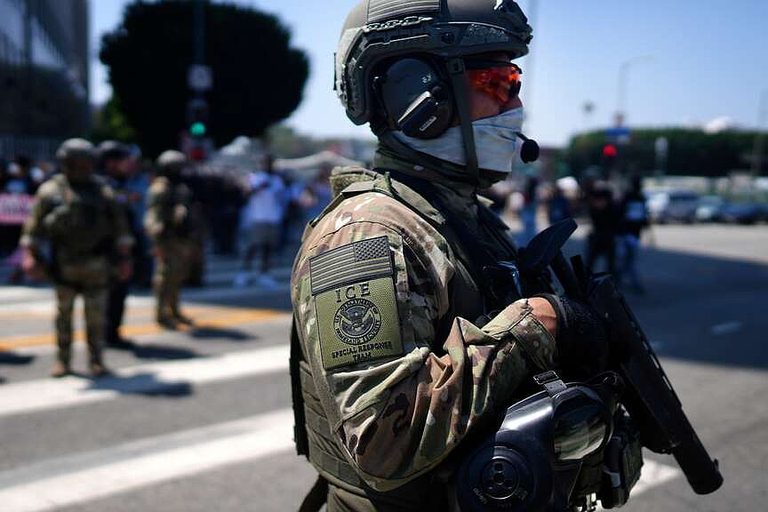
Immigration and Customs Enforcement (ICE) is set to equip its officers with body cameras by the end of September, but the agency’s policy on releasing footage has raised concerns about transparency. The policy states that ICE will only release body camera video when it is in the agency’s ‘best interests,’ giving the director broad discretion to decide what footage to make public.
Body Camera Policy
The policy requires officers to activate their cameras during routine enforcement activities, such as making arrests and responding to emergencies. However, when it comes to releasing footage of shootings or other serious confrontations, a committee will review the footage and recommend whether to release it. If the ICE director decides that releasing the footage is not in the agency’s best interests, they can block or delay its release.
Experts have criticized the policy, saying it could allow ICE to selectively release footage that presents the agency in a favorable light while withholding footage that could be damaging. ‘Body-worn cameras are being used as contemporary image-work tools to present the police to the public in the most favorable way possible,’ said professor Christopher Schneider of Brandon University in Canada.
Concerns About Transparency
The policy has raised concerns among advocates for transparency and accountability in law enforcement. ‘Without any clear way for the public to get access to it, it doesn’t do much good,’ said Katherine Hawkins, senior legal analyst at the nonprofit Project On Government Oversight. ‘It’s not unheard of for agencies to delay or withhold or selectively edit footage at all, but to say that explicitly just really gives the game away.’
Original reporting: Texarkana Gazette — read the source article.